Zara Wilkens | yesterday

We've Got a Soft Spot for Chardonnay

And by soft spot, we mean a fairly substantial one.


There's always a Chardonnay (or five) that's caught our attention at Claret. A beautiful bottle from Geelong, something particularly special from Burgundy, or a new discovery that's had us talking about it for days. We love the stuff.


Which is why we find it a challenge to change your mind when someone walks into the shop and confidently announces, "I don't drink Chardonnay."


Oh, really?

But I Don't Like Chardonnay...

We hear this one quite a bit.


And to be fair, Chardonnay hasn't always had the easiest time of it. For some, the name brings back memories of big, buttery, heavily oaked wines. The sort that practically required a knife and fork.


And while there's absolutely a place for a rich, generous Chardonnay, there's so much more to the variety than that. Chardonnay can be bright, mineral and wonderfully precise. It can be textural and savoury, with beautiful layers of fruit and subtle oak. Or it can be powerful, complex and built for a long life in the cellar. Same grape. Very different personalities. Which is exactly why we love it.


And if you're still finding your feet with wine, we've put together a little guide on how to choose wine when you don't know what you like. No exams, we promise.

The Locals. A Little Love for Geelong.

We're rather spoilt for Chardonnay around here.


From the Moorabool Valley to the Bellarine Peninsula and down towards the Otways, there's an extraordinary amount of good wine being made in our little corner of Victoria.

Different landscapes, different winemakers, different expressions of the same grape. And plenty of reasons to be proud of what's happening in our own backyard.


Moorabool Valley. The Heavy Hitters.


If we're talking Geelong Chardonnay, it's pretty hard to go past By Farr and Bannockburn. Two of the region's most celebrated producers, practically neighbours, and responsible for some of the finest Chardonnay coming out of Australia. By Farr brings remarkable depth and precision, while Bannockburn delivers beautiful texture, complexity and character. Not a bad couple of neighbours to have.


The Otways. A Little Off the Beaten Track.


Head towards the Otways and you'll find Heroes Vineyard, where James Thomas is making some seriously exciting cool-climate wines. Having spent time at Bannockburn and Clyde Park, James knows a thing or two about Chardonnay. We're also rather fond of his Anti-Hero Coola Road Chardonnay, made with fruit from Mount Gambier, just across the South Australian border. A little adventurous, a lot to love.


The Bellarine. More Good Things Close to Home.


And then there's Mermerus, another name we're particularly excited to share. A reminder that Geelong's wine story extends well beyond the familiar names, with smaller producers adding their own perspective to the region. And isn't that half the fun of a good wine shop? Finding something wonderful you didn't know existed.


All across Geelong and its surrounds, there's brilliant Chardonnay to be discovered. Lucky us.


If you're keen to explore a little further, we've written about the region in our Geelong Wine Guide, along with a closer look at some of our favourite Geelong wine producers.

The Everyday Favourites. No Occasion Required.

Not every Chardonnay needs a three-course dinner and your best glassware.


Sometimes you just want something delicious in the fridge. Something to open with dinner, share with friends or enjoy because it's Wednesday and you've made it halfway through the week.


We're big fans of Beechworth Wine Estates, Gioello Old Hill, Rob Hall, Wickhams Road and Medhurst for exactly that reason. Different regions, different styles, but all producers we love coming back to.


From the beautiful cool-climate expressions of Beechworth and the Yarra Valley to the more generous, textural styles that make Chardonnay such a pleasure to drink, there's plenty to explore without making a grand occasion of it.


A roast chicken, a bowl of pasta, some good cheese. Or just a glass while you're cooking. Perfect.

The Special Occasions. Or Just Because.

Now we're talking.


These are the bottles with a little more history, a little more pedigree and some pretty remarkable people behind them. Wines worth getting excited about, and perhaps finding an excuse to open.


Mount Mary. An Australian Icon.

Established in 1971 by John and Marli Middleton, Mount Mary helped put the Yarra Valley back on the Australian wine map. More than fifty years and three generations later, the family continues to produce some of Australia's most celebrated wines. Their Chardonnay is all elegance, precision and staying power. A little piece of Australian wine history, and a very good bottle to have tucked away.


Moreau-Naudet. A Chablis Love Affair.

The Moreau family has been making wine in Chablis for generations, but it was Stéphane Moreau who helped build the domaine's devoted following. His thoughtful approach to vineyard work and winemaking produced Chablis with extraordinary depth and personality. Following his untimely passing in 2016, his wife Virginie continued his legacy, keeping the domaine among the region's most exciting producers. A remarkable story, and some seriously beautiful Chardonnay.


Bindi Kostas Rind. A Friendship Worth Bottling.

Established in 1988 by Bill and Michael Dhillon, Bindi has become one of Australia's most revered producers of Pinot Noir and Chardonnay. The Kostas Rind Chardonnay takes its name from the man who first introduced Bill Dhillon to the world of wine. A rather lovely tribute to a friendship that helped inspire it all. Today, Michael Dhillon at Bindi continues to make extraordinary wines from the family's Macedon Ranges vineyard.

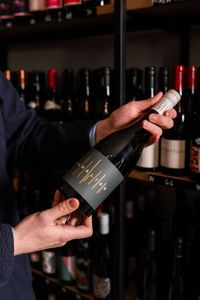
Richness, chewy nougat and that beautiful line of precision. A firm Claret favourite.


Attwoods Glenlyon. Burgundy Meets Ballarat.

After years working in London's restaurant scene and learning his craft in Burgundy, Troy Walsh brought his winemaking ambitions home to Victoria. Attwoods was established in 2010, with a focus on cool-climate vineyards, thoughtful winemaking and a distinctly Burgundian influence. The Glenlyon Chardonnay is a beautiful example of that philosophy. Detailed, expressive and wonderfully considered. A little French inspiration, with both feet firmly planted in Victorian soil.


Four producers, four very good stories and four rather excellent Chardonnays. Worth saving for a special occasion? Certainly.


Worth opening because it's Tuesday and you've cooked a particularly good roast chicken? Absolutely.


And while we're talking about special bottles, we're firm believers that good wine deserves a good glass. We've shared our thoughts on whether wine glassware really matters, if you're curious.

Come Over to the Chardonnay Side.

If you're already a Chardonnay lover, we'd imagine we're preaching to the choir.


But if you've spent the last decade avoiding it, perhaps it's time to reconsider.


Tell us what you normally like drinking. Tell us what you haven't enjoyed. Tell us about that one particularly unfortunate bottle from 2004.


We'll find you something worth trying.

Because somewhere between the crisp, mineral styles and the rich, textural beauties, there's a very good chance a Chardonnay has your name on it.


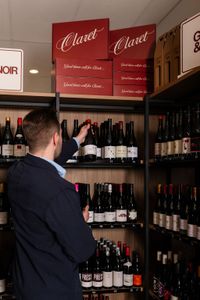
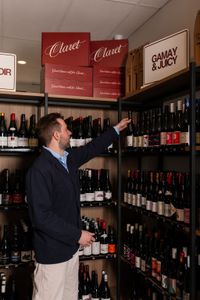
And we'd quite like to introduce you. Find us at Claret Wine Shop on Pakington Street in Newtown.

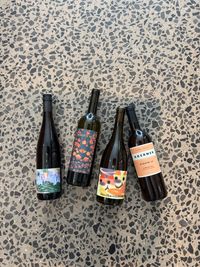
A few bottles we think are worth knowing about...


We always feel so lucky to be able to stock wonderful things on the shelf that we think will bring some level of discovery, excitement but above all else quality for you. Some are already established names. Others are producers we think you’ll be hearing us wax lyrical about in store. Either way, if you see something interesting on the shelf, ask us about it. We’re always happy to point you towards something new.


Good times call for Claret xx

Zara Wilkens

More Posts

How Long Does Wine Last Once Opened?How Long Does Wine Last Once Opened?
How Long Does Wine Last Once Opened?

And yes, the red wine should go in the fridge too.


You opened a bottle last night and did not finish it.


First, congratulations on your restraint. Second, how long do you have before the wine loses the things that made you open it in the first place?


The honest answer is that every wine is different. Some are best on the night they are opened. Some remain delicious for several days. Some appear quiet on day one and become far more expressive overnight. There is no universal countdown clock, but there are a few things you can do to give an open bottle a better chance.


The short version is simple: Seal it, refrigerate it and reduce the amount of air sitting above the wine where possible. Yes, that includes red wine.

How Cold Should Wine Be?How Cold Should Wine Be?
How Cold Should Wine Be?

A practical guide to serving temperature, fridge time and drinking wine however you like it.


Wine people can become very particular about temperature.


Sparkling must be served at precisely this number. Chardonnay must be removed from the fridge at exactly that moment. Red wine must be served at room temperature, whatever that is supposed to mean in an Australian kitchen in January.


We are not here to confiscate your ice cubes. If you like your wine properly cold, drink it properly cold. If you enjoy a cube or two in the glass on a hot afternoon, nobody from Claret is coming to your house to stop you.


It is still useful to understand what temperature does to wine. Serving a wine colder or warmer changes how much aroma, flavour, acidity, alcohol and texture you notice. Once you know that, you can choose the temperature that makes the wine taste best to you.


Here is the useful version.

A practical guide to bottles, bubbles and making sure the good times don’t run dry.A practical guide to bottles, bubbles and making sure the good times don’t run dry.
A practical guide to bottles, bubbles and making sure the good times don’t run dry.

Planning a party involves several important questions.


How many people are coming? What are we feeding them? Do we have enough ice? Who said they were bringing chairs? And, most importantly, how much wine do we actually need?


Buy too little and the final hour becomes a cautious examination of what remains in the fridge. Buy too much and, well, you have wine left over. Of the two possible problems, we know which one we would prefer.

The amount matters, but so does the mix. The difference between a party that was perfectly nice and one your friends whisper approvingly about for weeks may come down to whether you bought enough bubbles and remembered that not everyone wants the same kind of white wine.


If you would like to skip straight to the numbers, use the Claret Party Drinks Calculator. Tell us about your guests and what you plan to serve, and we’ll prepare your suggested shopping list.


Otherwise, let’s talk through it.

<p>How to Decant Wine Without Overthinking It</p><p>How to Decant Wine Without Overthinking It</p>

How to Decant Wine Without Overthinking It

Decanting wine can look suspiciously like one of those rituals designed to make everyone at the table feel they have missed an important class.


There is the beautiful glass vessel. The careful pouring. The serious expression. Occasionally, a candle.


But the useful version is much simpler. You decant wine for one of two reasons: to give it air or to leave sediment behind. Sometimes both. That is really it. A decanter can help a young wine relax, allow a quiet wine to become more expressive and separate an older wine from the sediment that has gathered in the bottle. It can also make the table look very good, which is not the primary purpose but is certainly not a drawback. Here is how to decant wine without turning dinner into a formal examination.

<p>Does Wine Glassware Really Matter?</p><p>Does Wine Glassware Really Matter?</p>

Does Wine Glassware Really Matter?

Yes.


Not just for the aesthetic, although we are certainly not pretending the vibes are irrelevant. Wine simply feels better in a good glass. And, let’s be honest, the wine does cry a little when it is served in something with a chunky rim and a stem built like a table leg.


The right glass does not need to be painfully expensive, reserved for special occasions or designed for one very specific grape grown on one particular hillside. It just needs to help the wine be its best self.


That means giving the wine enough room to move, enough space for its aromas to collect and a fine enough rim that you notice the wine rather than the vessel carrying it.

<p>How to Choose Wine When You Don’t Know What You Like</p><p>How to Choose Wine When You Don’t Know What You Like</p>

How to Choose Wine When You Don’t Know What You Like

Choosing wine can be intimidating.


Perhaps you are standing in a wine shop looking at several hundred labels, none of which are giving much away. Perhaps you are in a restaurant, everyone has handed you the wine list, and a server is waiting while you pretend to understand the difference between two villages in Burgundy.


We have all been there.


Wine has its own language, and that language is not always particularly helpful. People start talking about red apples, green apples, ruby plums, black plums, graphite, forest floors and pencil shavings. Before long, the wine sounds less like a drink and more like a fruit salad served inside a stationery cupboard.

The good news is that you do not need to know the right wine words to choose something delicious.


You just need to know how you want the wine to feel.

Geelong Wine Without the Road Trip How to Taste the Region Closer to HomeGeelong Wine Without the Road Trip How to Taste the Region Closer to Home
Geelong Wine Without the Road Trip How to Taste the Region Closer to Home

A day spent driving between Geelong cellar doors is a very good day.


There are vineyards, long lunches, rolling hills, coastal views and the deeply satisfying feeling that comes from buying wine approximately twelve metres from where it was made.

But sometimes you want to explore Geelong wine without organising an itinerary, appointing a designated driver or committing an entire Saturday to the cause.


Good news. You can start much closer to home.


Whether you order a local wine by the glass, build a few-bottle tasting from the shop or simply choose one producer you haven't tried before, there are plenty of ways to get to know the region without embarking on a full cellar door tour.


Orange Wine, Explained Without the LectureOrange Wine, Explained Without the Lecture
Orange Wine, Explained Without the Lecture

Orange wine tastes as good as it looks. Sometimes peachy and tropical, sometimes floral and savoury, often textural, always capable of making a table look approximately 40 per cent more fun.

It can also attract explanations with the length and emotional weight of a minor thesis. We will not be doing that. Here is orange wine without the lecture: what it is, why it has colour, what it tastes like and where to begin.

Chillable Reds: Yes, Red Wine Belongs in the FridgeChillable Reds: Yes, Red Wine Belongs in the Fridge
Chillable Reds: Yes, Red Wine Belongs in the Fridge

Red wine belongs at room temperature. Sure—if your room is a chilly European cellar and not an Australian kitchen in January.


The better rule is simpler: some reds are absolutely delicious with a bit of fridge time. A good chillable red wine is bright, light on its feet and wonderfully easy to drink. It brings the juicy pleasure of red fruit with the refreshment usually assigned to white or rosé. Less ceremony. More “shall we open another?” energy.