
Conor McNie | 23 hours ago

How to Choose Wine When You Don’t Know What You Like

Choosing wine can be intimidating.


Perhaps you are standing in a wine shop looking at several hundred labels, none of which are giving much away. Perhaps you are in a restaurant, everyone has handed you the wine list, and a server is waiting while you pretend to understand the difference between two villages in Burgundy.


We have all been there.


Wine has its own language, and that language is not always particularly helpful. People start talking about red apples, green apples, ruby plums, black plums, graphite, forest floors and pencil shavings. Before long, the wine sounds less like a drink and more like a fruit salad served inside a stationery cupboard.

The good news is that you do not need to know the right wine words to choose something delicious.


You just need to know how you want the wine to feel.

Start with the easiest question: red, white or something else?

You do not need to name a grape variety or wine region. Beginning with a broad direction is enough.


Do you feel like red or white?

Would you prefer something cold and refreshing?

Could there be bubbles involved?

Are you open to rosé, orange wine or a light red served chilled?


“I feel like a cold white wine” is useful information. So is “I normally drink red, but it’s warm and I want something lighter.”


You are not expected to arrive with the entire decision already made. Narrowing the field is part of the job for the person helping you.

Think about shape and feel, not a list of flavours

One of the most useful ways to describe wine is by how you want it to feel, rather than exactly what you want it to taste like.


This is particularly helpful with white wine. Do you want something soft, rounded and textured? This might feel comforting, generous or cosy. These wines will often have gentler acidity, more weight or a creamier texture. Or do you want something crisp, zesty and vibrant? Something cold, refreshing and energetic, with acidity that makes your mouth water and encourages another sip.


You could simply say:

“I’d like something fresh and crisp.”

“I want a white with a bit more texture.”

“I don’t want anything too sharp.”

“I’m looking for something rich, but not heavy.”


Those descriptions are much more helpful than trying to decide whether you can detect green apple, yellow peach or a very specific type of lemon. The same idea works for red wine. Do you want something light, juicy and energetic, perhaps even with a little chill? Or something darker, richer and more structured, with more weight and grip? Maybe you want a red that feels soft and easy, rather than big and serious. Maybe you want the big and serious one. Both are perfectly reasonable moods.


Try describing the shape of the wine:

“Something light and juicy.”

“A red with a bit of structure, but nothing too heavy.”

“Something soft and easy.”

“I want a proper big red tonight.”


That gives us plenty to work with.

Fruity does not necessarily mean sweet

This is one of the most common points of confusion.


All wine begins with fruit, so most wines will have some kind of fruit character. A wine can smell or taste like ripe peach, berries or plums while still being completely dry. In wine language, dry generally means that the wine does not have noticeable residual sweetness. It does not mean the wine has no fruit flavour. This is why saying “I don’t like fruity wine” can sometimes send the conversation in the wrong direction.


You may actually mean:

“I don’t like sweet wine.”

“I don’t want anything too ripe.”

“I prefer savoury flavours.”

“I want something fresh rather than rich.”


Those are all more specific and useful. If you are not sure which one you mean, say that. At Claret, we should be able to ask a couple of questions and help you work it out.

Chilled or not chilled?

Temperature can change the whole mood of a wine.


For whites, rosé and sparkling wine, this question is usually fairly simple. Do you want something properly cold and refreshing, or something with more texture that can warm slightly in the glass? Red wine gives you more room to play. Lighter reds can be excellent with a bit of fridge time. Pinot Noir, Gamay, Grenache and lighter red blends can become brighter, fresher and even more delicious when served cool.


If that sounds appealing, ask for:

“A light red I can chill.”

“Something juicy from the fridge.”

“A red that works on a warm day.”


You do not have to know which grapes are suitable. That is what we are here for.

If you prefer a richer Cabernet, Shiraz or another structured red, it will usually show better cool rather than warm, but not necessarily refrigerator cold. And if anyone insists that all red wine must be served at room temperature, it is worth remembering that the room in question was probably not an Australian kitchen in summer.

How do we feel about fizz?

Sparkling wine solves an impressive number of problems.


It can be fresh and simple, serious and complex, fruity and playful, or dry and savoury. It works before dinner, during dinner and when dinner has been abandoned in favour of snacks.


The first question is whether you want Champagne specifically, or simply something sparkling.


Then think about the mood:

Do you want something light and fresh?

Something richer and more complex?

Very dry and savoury?

Soft, fruity and easy?

Traditional and familiar?

Slightly unusual?


You can also give a price and let the person helping you take it from there.

“I’d like to spend around $40 on something sparkling” is a complete and useful brief.

So is:

“I need Champagne for someone who knows a lot about Champagne. Please help.”

Safe and familiar, or something new?

Sometimes you want an old reliable. Sometimes you want to be surprised.


Neither is a better way to buy wine. If you want something safe, tell us what you usually drink. You do not need to remember the full producer, vineyard and vintage. A grape, region, label colour or even a photograph on your phone can help.


“I usually like Marlborough Sauvignon Blanc.”

“I had a Tasmanian Chardonnay recently and loved it.”

“I normally buy Pinot Noir.”

“I can’t remember the name, but the label had a bird on it.”


We have worked with less. If you want something new, it helps to explain how far outside your usual drinking you are willing to travel.


You might say:

“I like Pinot Noir, but I want to try something different.”

“I normally drink Sauvignon Blanc. What else is fresh and crisp?”

“I want something a little weird, but still delicious.”

“Give me something I probably haven’t tried before.”


That allows us to introduce a new grape, region or style without sending you somewhere completely unrelated to what you enjoy.

Is food part of the decision?

Sometimes you are choosing wine for a particular dish. Sometimes you are choosing wine because you feel like drinking it.


Both approaches are valid.


If food matters, tell the person helping you what you are eating. You do not need to have worked out the pairing first. In fact, that is the bit they can help with.


You might be matching the main ingredient, the sauce or the overall mood.


Perhaps you want Albariño because you are serving boquerones, Manchego and Spanish potato chips, and leaning enthusiastically into a theme. Excellent.


Perhaps you are making roast chicken and want something versatile. Perhaps dinner is burgers and you feel like bubbles. Also excellent, and a regular occurrence in our house.


Wine and food can complement one another. They can contrast with one another. Or you can simply enjoy the food, enjoy the wine and enjoy the company.


Not every meal needs to become a pairing exercise.

Tell them your budget

Please do not be shy about price.


Great wine can be found from around $20 through to $1000 and beyond. The useful question is not whether your budget is impressive. It is whether the person helping you knows what it is.


In a wine shop, you can be completely direct:

“I’d like to spend around $30.”

“My budget is $50 to $70.”

“It’s a gift, and I don’t want to go over $100.”


That is helpful information. It allows us to find the best possible bottle at a price that feels comfortable for you.


In a restaurant, if you would rather not announce the budget to the whole table, point to a bottle on the list and say: “I’m looking for something in this sort of range.”


Price is not a test, and spending more does not automatically mean you will enjoy the wine more. The goal is to find something suitable and excellent value within your budget.

Useful things to say in a wine shop

If you are buying wine, try giving the attendant a few pieces of information:

Red, white, rosé, orange or sparkling

Light and fresh, or rich and structured

Familiar, or something new

What you are eating, if it matters

How much you would like to spend

Anything you know you dislike


For example:

“I’m after a white around $35. Something crisp and fresh for seafood, but I’d like to try something other than Sauvignon Blanc.”


That is an excellent wine-shop brief. (Just saying...)


So is:


“I need a red for dinner. Around $50, not too heavy, and everyone likes Pinot Noir.”


Or even:


“I’ve had a terrible week and I would like something delicious.”


Context matters.

Useful things to say in a restaurant

Ordering wine in a restaurant can feel more pressured because people are waiting and the list may be full of unfamiliar names.


You can make it simple:


“We’d like a fresh white that will work across a few dishes.”

“We normally drink Chardonnay, but nothing too rich.”

“Could you recommend a light red that can be served cool?”

“We’re looking for something around this price.”

“Is there something local you’re particularly excited about?”


You are allowed to ask questions. You are also allowed to ask for a moment to look at the list.


If a recommendation sounds too adventurous, say so. If you want something unusual, say that too. The aim is not to impress the server. The aim is to end up with a bottle everyone wants to drink.

Things that are less helpful than they sound

There are no wrong questions, but some phrases can mean several different things.


“I want something smooth” might mean soft tannins, low acidity, ripe fruit or simply no harshness.

“I don’t like dry wine” might mean you prefer some sweetness, or it might mean you dislike wines that feel sharp or tannic.

“I don’t like Chardonnay” may mean you once had a heavily oaked Chardonnay you did not enjoy.

“I want a natural wine” can cover an enormous range of flavours and styles.


You can still use these phrases. Just expect a follow-up question or two.


The person helping is not testing your knowledge. They are trying to translate what you mean into something you will enjoy.

You are allowed not to know

After more than 17 years working in wine shops, I can promise that nobody arrives knowing everything about wine.


The more you learn, the more you realise how much there is still to discover. New regions, producers, grapes, vintages and styles appear constantly. That is part of what makes wine interesting, but it is also what can make it feel intimidating.


You do not need the perfect vocabulary.

You do not need to identify aromas on command.

You do not need to know the difference between every grape variety.

Think about how you want the wine to feel. Decide whether you want something familiar or new. Mention the food if it matters. Give a comfortable budget.


Then let the person helping you do their job.


And if you are still unsure, come into Claret and say exactly that. We have all been there before.


A few bottles we think are worth knowing about...


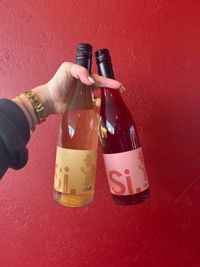
We always feel so lucky to be able to stock wonderful things on the shelf that we think will bring some level of discovery, excitement but above all else quality for you. Some are already established names. Others are producers we think you’ll be hearing us wax lyrical about in store. Either way, if you see something interesting on the shelf, ask us about it. We’re always happy to point you towards something new.


Good times call for Claret xx

Conor McNie

More Posts

Geelong Wine Without the Road Trip How to Taste the Region Closer to HomeGeelong Wine Without the Road Trip How to Taste the Region Closer to Home
Geelong Wine Without the Road Trip How to Taste the Region Closer to Home

A day spent driving between Geelong cellar doors is a very good day.


There are vineyards, long lunches, rolling hills, coastal views and the deeply satisfying feeling that comes from buying wine approximately twelve metres from where it was made.

But sometimes you want to explore Geelong wine without organising an itinerary, appointing a designated driver or committing an entire Saturday to the cause.


Good news. You can start much closer to home.


Whether you order a local wine by the glass, build a few-bottle tasting from the shop or simply choose one producer you haven't tried before, there are plenty of ways to get to know the region without embarking on a full cellar door tour.


Orange Wine, Explained Without the LectureOrange Wine, Explained Without the Lecture
Orange Wine, Explained Without the Lecture

Orange wine tastes as good as it looks. Sometimes peachy and tropical, sometimes floral and savoury, often textural, always capable of making a table look approximately 40 per cent more fun.

It can also attract explanations with the length and emotional weight of a minor thesis. We will not be doing that. Here is orange wine without the lecture: what it is, why it has colour, what it tastes like and where to begin.

Chillable Reds: Yes, Red Wine Belongs in the FridgeChillable Reds: Yes, Red Wine Belongs in the Fridge
Chillable Reds: Yes, Red Wine Belongs in the Fridge

Red wine belongs at room temperature. Sure—if your room is a chilly European cellar and not an Australian kitchen in January.


The better rule is simpler: some reds are absolutely delicious with a bit of fridge time. A good chillable red wine is bright, light on its feet and wonderfully easy to drink. It brings the juicy pleasure of red fruit with the refreshment usually assigned to white or rosé. Less ceremony. More “shall we open another?” energy.

Geelong Wine, Without the Homework: Where to StartGeelong Wine, Without the Homework: Where to Start
Geelong Wine, Without the Homework: Where to Start

Geelong wine is close enough to feel local, varied enough to keep surprising you, and—if we are being honest—occasionally discussed as though everyone arrived with a geology degree. You did not. Excellent. This Geelong wine guide is the useful version: three parts of the region, three grapes to know, and a very easy way to choose your first bottle.

<p>Geelong Wine Producers: A Claret Guide</p><p>Geelong Wine Producers: A Claret Guide</p>

Geelong Wine Producers: A Claret Guide

We'd love to say we stock everything Geelong has to offer. We absolutely do not. There are simply too many good wines, too many small producers and not enough shelf space. Rather than attempt to create a definitive list of the best Geelong wineries, we've put together a Claret edit of some of the local producers currently on our shelves, in our fridges or on our bar list. These are wines we like, drink, pour and come back to. Some are established names that have helped put Geelong on the map; others are newer producers we're excited to watch. The common thread is that they tell us something interesting about where they're from.

What Wine Should I Bring to Dinner? A Claret GuideWhat Wine Should I Bring to Dinner? A Claret Guide
What Wine Should I Bring to Dinner? A Claret Guide

Someone has invited you to dinner.


You've been told not to bring anything.


You're obviously bringing something.


But what? Choosing a bottle for someone else's dinner can be surprisingly stressful. You don't know exactly what's being served, whether they're a red or white person, what they've already bought, or whether your host is secretly judging your wine choices.


Don't worry Claret family. We've got you.

Champagne vs Sparkling Wine: What’s the Difference?Champagne vs Sparkling Wine: What’s the Difference?
Champagne vs Sparkling Wine: What’s the Difference?

Champagne is sparkling wine. But sparkling wine isn’t Champagne...


It sounds simple, but there’s a surprisingly big world hiding behind those two words. At Claret, we’re big fans of Champagne. We’re also big fans of Australian sparkling, Loire Valley bubbles, Crémant, pét-nat and pretty much anything else that makes an excellent bottle of fizz. So, what actually makes Champagne different? And if Champagne is off the menu — whether because of price, occasion or simply because you fancy trying something new — what should you drink instead?


Let’s get into it.

Spring Drinking: The Wines We’re Reaching ForSpring Drinking: The Wines We’re Reaching For
Spring Drinking: The Wines We’re Reaching For

Spring has arrived, and with it comes a very important change in drinking habits.


Longer afternoons, windows thrown open, the first lunches outside and those evenings where nobody seems particularly interested in going home. Suddenly, we're looking for wines that feel a little lighter, fresher and more energetic.


At Claret, we've been stocking the shelves accordingly.


From cool-climate Victorian Chardonnay and plenty of bubbles to bright, chillable reds and European varieties, these are some of the wines we're reaching for this spring.

Negroni Month at ClaretNegroni Month at Claret
Negroni Month at Claret

September is Negroni Month at Claret.

For the entire month, we're giving one of the world's most iconic cocktails the attention it deserves — with six different takes on the Negroni pouring at the bar.

If you're already a Negroni person, you'll know exactly why we're excited. If you're not, September is a very good time to become one.