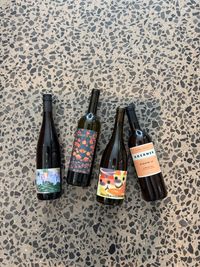
Orange wine runs from barely blushing to properly amber, so the best first bottle depends on how much texture and adventure you want. These are five useful doors in.
Mulline Skin Contact Pinot Gris
A local Geelong route into the style. Pinot Gris skins bring a subtle blush rather than fluorescent orange, with freshness and gentle grip keeping the wine light on its feet. A smart choice when you want to understand skin contact without beginning at the loudest end of the room.
Koerner Pigato Vermentino
An excellent entry point from Watervale in the Clare Valley. Vermentino spends time on skins, then rests in steel: peach, iced tea and refreshment are the headline acts. The 2024 release spent 20 days on skins and landed at just 10.3% alcohol, proof that texture does not have to mean heaviness.
Momento Mori Fistful of Flowers
A hallmark Australian skin-contact wine from Dane Johns and the Momento Mori family. Moscato Giallo and Vermentino turn up the florals—marigold, blossom, stone fruit—while a cool, salty line keeps the whole thing alive. Dane calls it his “wine for the people”; we call it a bottle that keeps hitting the mark.
Italian Plastic Golden
Golden says orange wine in full colour: hay, nectarine and mango on the nose; salty peach and nougat through the mouth. Ten days on skins give it texture without removing the ease. Friendly, sunlit and very happy near a plate of something salty.
Azimut Brisat Orange
From the Suriol family’s Azimut project in Penedès, this is a changing blend of local, organically farmed grapes. “Brisat” is the Catalan term for a skin-contact white. A short skin ferment and time in underground concrete make it fresh, fruity and lightly grippy rather than heavy—a reminder that the landscape of orange wine keeps moving. Maybe the grass is greener sometimes. Or at least more golden.