Zara Wilkens | 9 days ago

How to Decant Wine Without Overthinking It

Decanting wine can look suspiciously like one of those rituals designed to make everyone at the table feel they have missed an important class.


There is the beautiful glass vessel. The careful pouring. The serious expression. Occasionally, a candle.


But the useful version is much simpler. You decant wine for one of two reasons: to give it air or to leave sediment behind. Sometimes both. That is really it. A decanter can help a young wine relax, allow a quiet wine to become more expressive and separate an older wine from the sediment that has gathered in the bottle. It can also make the table look very good, which is not the primary purpose but is certainly not a drawback. Here is how to decant wine without turning dinner into a formal examination.

What does decanting wine actually do?

Pouring wine into a decanter exposes more of it to air.


That contact with oxygen can soften the impression of firm tannins, release aromas and help a wine that initially feels closed or tightly wound become more generous. It does not magically improve every bottle, but it can give certain wines room to show more of themselves.


Decanting also allows you to separate clear wine from sediment. Sediment is a natural part of many mature, unfiltered or minimally filtered wines. It is not harmful, but it is rarely the most enjoyable final mouthful of the evening.


The important distinction is this:

Young wines are generally decanted to introduce air.

Mature wines are often decanted carefully to remove sediment.


Those are different jobs, so they deserve slightly different approaches.

Which wines should you decant?

Young, structured wines are the easiest place to begin.


A youthful Cabernet, Shiraz, Nebbiolo, Barolo, Bordeaux blend or another wine with plenty of tannin and concentration may become more open and relaxed after some time in a decanter. The fruit can feel more expressive, the structure less stern and the whole wine more settled.


Some reductive wines also benefit from air. If a newly opened bottle smells muted, smoky, rubbery or slightly closed, a decanter may help those initial aromas lift and reveal what is underneath.


And it is not only red wine. Concentrated Chardonnay, white Burgundy, textural white wines and some Rieslings can open beautifully with air. Orange wines and skin-contact whites may also become more expressive after a short decant.


Rosé and sparkling wine can technically be decanted too, although we would treat both gently. Decanting sparkling wine will soften the bubbles, which can be lovely for complex Champagne but is not helpful if the fizz is the entire point of the bottle.

Which wines should you decant?

Absolutely not. Lets also be real, we don't want to ad another dish to wash if we do not have to.


Some wines are already bright, open and ready to go. Others are built around freshness and immediacy, and extended air will not add much. A delicate older wine may actually lose its perfume and energy if it spends too long exposed to oxygen.


The easiest rule is to taste the wine first.

Open the bottle. Pour a small glass. Smell it and take a sip. If it feels expressive and delicious, congratulations, your work may already be complete.


If it feels tight, muted, firm or as though there is more waiting underneath, pour it into the decanter and taste it again after a little time. Decanting should be a response to the wine in front of you, not a compulsory ceremony attached to the price of the bottle.

How long should you decant wine?

There is no universal countdown timer, because wines develop at different speeds.

As a practical starting point:


Young, structured reds:

Try 30 to 60 minutes, then taste again.


Very concentrated or tightly wound wines:

They may continue improving for one to two hours.


Textural or concentrated whites:

Start with 15 to 30 minutes and keep an eye on the temperature.


Mature wines:

Decant shortly before serving if the purpose is removing sediment. Fragile wines may fade quickly once exposed to air.


These are guides, not laws.


Taste the wine when you open it. Taste it after decanting. Taste it again as dinner progresses. The useful part is noticing when the wine becomes more expressive, not winning an argument about whether it needed exactly 47 minutes.

How to decant a young wine

Young wine is generally forgiving, so this is the easy version.

Open the bottle and taste a small amount.

Pour the wine steadily into a clean decanter.

A little movement is fine. The aim is to introduce air.

Leave it to sit, then taste periodically.

Serve it when it feels more open and delicious.


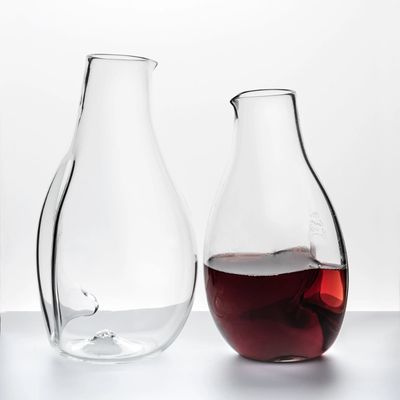
A wider decanter creates more surface area between the wine and the air, making it useful for youthful, structured wines.


If you are opening the bottle at the last minute, do not panic. Pouring it into the decanter and giving it a gentle swirl will still expose it to more air than leaving it inside the bottle.

How to decant an older wine

Older wine deserves a gentler hand.


Stand the bottle upright several hours beforehand, or ideally the day before, so the sediment can settle at the bottom. When you are ready to serve it, open the bottle carefully and pour slowly into the decanter.


Traditionally, a candle is placed beneath the neck of the bottle so you can see when sediment approaches. A phone torch works too, even if it offers slightly less romance.

Stop pouring when you see the sediment reach the shoulder or neck of the bottle.


The aim is not to splash the wine around or give it hours of air. You are simply moving the clear wine away from the sediment. Taste it immediately and watch how it develops, because mature wines can change quickly.

Can you use a jug instead of a decanter?

Yes.


If the purpose is to give a young wine air, a clean glass jug will do the job. In a true wine emergency, you can even pour the wine into a jug and then return it to the bottle. This is known as double decanting and is particularly useful if you need the bottle for serving or transporting.


The jug should be completely clean and free from detergent, cupboard smells and yesterday's orange juice. The wine will notice.


A proper decanter gives you a better shape for pouring, aeration and separating sediment. It also turns a practical job into a rather lovely part of the table. But decanting is not invalidated because the vessel lacks artistic credentials.

Does the shape of a decanter matter?

Yes, although you do not need to become overly technical about it.


A broad base exposes more wine to air, which is helpful for young, structured bottles. A more compact shape or narrower neck gives you greater control when decanting a mature wine and can reduce unnecessary exposure.


The opening should be comfortable to pour into and out of. The decanter should feel balanced in the hand, especially when full. It should also be possible to clean, because a beautiful decanter that permanently smells like the previous bottle is not doing anyone a favour.


Capacity matters too:

A 750ml decanter is designed for a standard bottle.

A 1500ml decanter gives a magnum the space it needs.


Using a magnum decanter for a standard bottle is perfectly acceptable if you want greater surface area or simply enjoy the drama.

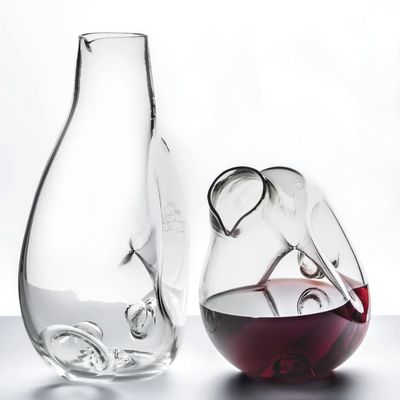
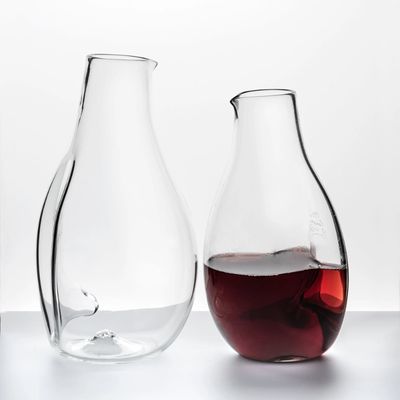
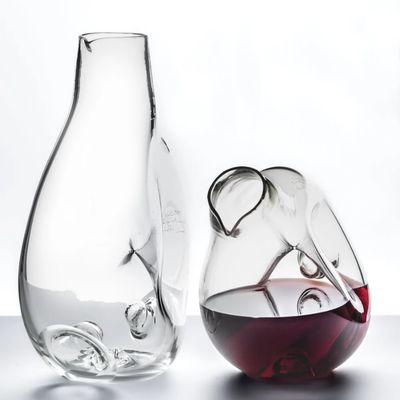
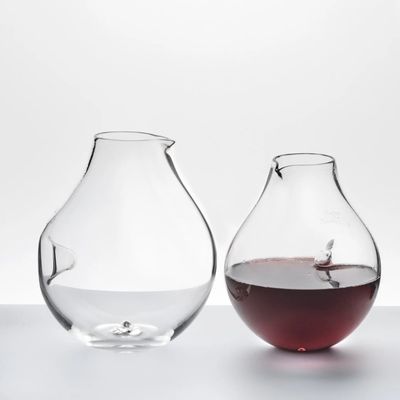
Why we love Brian Hirst decanters

If an object is going to live on the table, we would like it to be useful and beautiful.


Brian Hirst has worked in Australian studio glass for more than 40 years. His decanters are hand blown, functional pieces made to be used rather than admired from a safe distance. They have presence without becoming fussy, and each one carries the small variations that come with handmade glass.


That balance feels very Claret.


The Penguin was the original design in Brian's decanter series. Its traditional form has a clean, modern edge and an ergonomic shape designed to sit comfortably in the hand. It is available in both 750ml and 1500ml sizes for standard bottles and magnums.


The G&B was created by Brian Hirst in collaboration with Giorgio De Maria. It carries the same combination of traditional form, modern simplicity and practical handling.

Then there are the Signature decanters, sculptural pieces that make opening a special bottle feel like an occasion before the cork has even left the bottle.


They do the job properly. They also happen to look exceptionally good while doing it.

How to clean a wine decanter

Rinse the decanter as soon as practical after use. Warm water is usually enough if the wine has not been left sitting for too long.


Avoid strongly scented detergent, which can linger inside the glass. For marks that are difficult to reach, decanter-cleaning beads can help loosen residue without requiring a brush inside the vessel.


Rinse thoroughly and allow the decanter to drain completely. A decanter stand can help air circulate while it dries.


Before the next use, smell the inside. It should smell like absolutely nothing.

And what about the glass?

Decanting gives the wine room to open up, but what you pour it into matters too. A good wine glass helps you enjoy all those newly awakened aromatics.


Read our guide to whether wine glassware really matters.

The Claret verdict

Decanting is useful, but it does not need to become theatre unless you enjoy the theatre.

Taste the wine first. Give young, structured bottles air when they need it. Treat mature wines gently and use the decanter to leave sediment behind. Keep tasting as the wine changes.


A clean jug will work. A beautiful handmade decanter simply makes the process more pleasurable.


And if you are going to place one in the middle of the table, fill it with a bottle you are excited to drink and surround it with people you like. That remains the most important part.


Explore the Brian Hirst decanter range at Claret, or visit us on Pakington Street and ask which bottle deserves a little air.

A few bottles we think are worth knowing about...


We always feel so lucky to be able to stock wonderful things on the shelf that we think will bring some level of discovery, excitement but above all else quality for you. Some are already established names. Others are producers we think you’ll be hearing us wax lyrical about in store. Either way, if you see something interesting on the shelf, ask us about it. We’re always happy to point you towards something new.


Good times call for Claret xx

Zara Wilkens

More Posts

<p>Does Wine Glassware Really Matter?</p><p>Does Wine Glassware Really Matter?</p>

Does Wine Glassware Really Matter?

Yes.


Not just for the aesthetic, although we are certainly not pretending the vibes are irrelevant. Wine simply feels better in a good glass. And, let’s be honest, the wine does cry a little when it is served in something with a chunky rim and a stem built like a table leg.


The right glass does not need to be painfully expensive, reserved for special occasions or designed for one very specific grape grown on one particular hillside. It just needs to help the wine be its best self.


That means giving the wine enough room to move, enough space for its aromas to collect and a fine enough rim that you notice the wine rather than the vessel carrying it.
<p>How to Choose Wine When You Don’t Know What You Like</p><p>How to Choose Wine When You Don’t Know What You Like</p>

How to Choose Wine When You Don’t Know What You Like

Choosing wine can be intimidating.


Perhaps you are standing in a wine shop looking at several hundred labels, none of which are giving much away. Perhaps you are in a restaurant, everyone has handed you the wine list, and a server is waiting while you pretend to understand the difference between two villages in Burgundy.


We have all been there.


Wine has its own language, and that language is not always particularly helpful. People start talking about red apples, green apples, ruby plums, black plums, graphite, forest floors and pencil shavings. Before long, the wine sounds less like a drink and more like a fruit salad served inside a stationery cupboard.

The good news is that you do not need to know the right wine words to choose something delicious.


You just need to know how you want the wine to feel.

Geelong Wine Without the Road Trip How to Taste the Region Closer to HomeGeelong Wine Without the Road Trip How to Taste the Region Closer to Home
Geelong Wine Without the Road Trip How to Taste the Region Closer to Home

A day spent driving between Geelong cellar doors is a very good day.


There are vineyards, long lunches, rolling hills, coastal views and the deeply satisfying feeling that comes from buying wine approximately twelve metres from where it was made.

But sometimes you want to explore Geelong wine without organising an itinerary, appointing a designated driver or committing an entire Saturday to the cause.


Good news. You can start much closer to home.


Whether you order a local wine by the glass, build a few-bottle tasting from the shop or simply choose one producer you haven't tried before, there are plenty of ways to get to know the region without embarking on a full cellar door tour.


Orange Wine, Explained Without the LectureOrange Wine, Explained Without the Lecture
Orange Wine, Explained Without the Lecture

Orange wine tastes as good as it looks. Sometimes peachy and tropical, sometimes floral and savoury, often textural, always capable of making a table look approximately 40 per cent more fun.

It can also attract explanations with the length and emotional weight of a minor thesis. We will not be doing that. Here is orange wine without the lecture: what it is, why it has colour, what it tastes like and where to begin.

Chillable Reds: Yes, Red Wine Belongs in the FridgeChillable Reds: Yes, Red Wine Belongs in the Fridge
Chillable Reds: Yes, Red Wine Belongs in the Fridge

Red wine belongs at room temperature. Sure—if your room is a chilly European cellar and not an Australian kitchen in January.


The better rule is simpler: some reds are absolutely delicious with a bit of fridge time. A good chillable red wine is bright, light on its feet and wonderfully easy to drink. It brings the juicy pleasure of red fruit with the refreshment usually assigned to white or rosé. Less ceremony. More “shall we open another?” energy.

Geelong Wine, Without the Homework: Where to StartGeelong Wine, Without the Homework: Where to Start
Geelong Wine, Without the Homework: Where to Start

Geelong wine is close enough to feel local, varied enough to keep surprising you, and—if we are being honest—occasionally discussed as though everyone arrived with a geology degree. You did not. Excellent. This Geelong wine guide is the useful version: three parts of the region, three grapes to know, and a very easy way to choose your first bottle.

<p>Geelong Wine Producers: A Claret Guide</p><p>Geelong Wine Producers: A Claret Guide</p>

Geelong Wine Producers: A Claret Guide

We'd love to say we stock everything Geelong has to offer. We absolutely do not. There are simply too many good wines, too many small producers and not enough shelf space. Rather than attempt to create a definitive list of the best Geelong wineries, we've put together a Claret edit of some of the local producers currently on our shelves, in our fridges or on our bar list. These are wines we like, drink, pour and come back to. Some are established names that have helped put Geelong on the map; others are newer producers we're excited to watch. The common thread is that they tell us something interesting about where they're from.

What Wine Should I Bring to Dinner? A Claret GuideWhat Wine Should I Bring to Dinner? A Claret Guide
What Wine Should I Bring to Dinner? A Claret Guide

Someone has invited you to dinner.


You've been told not to bring anything.


You're obviously bringing something.


But what? Choosing a bottle for someone else's dinner can be surprisingly stressful. You don't know exactly what's being served, whether they're a red or white person, what they've already bought, or whether your host is secretly judging your wine choices.


Don't worry Claret family. We've got you.

Champagne vs Sparkling Wine: What’s the Difference?Champagne vs Sparkling Wine: What’s the Difference?
Champagne vs Sparkling Wine: What’s the Difference?

Champagne is sparkling wine. But sparkling wine isn’t Champagne...


It sounds simple, but there’s a surprisingly big world hiding behind those two words. At Claret, we’re big fans of Champagne. We’re also big fans of Australian sparkling, Loire Valley bubbles, Crémant, pét-nat and pretty much anything else that makes an excellent bottle of fizz. So, what actually makes Champagne different? And if Champagne is off the menu — whether because of price, occasion or simply because you fancy trying something new — what should you drink instead?


Let’s get into it.