Open mobile app
Claret Wine Typically replies within a few hours

Would you like some assistance with a recommendation?

Zara Wilkens | 1 hour ago

Champagne vs Sparkling Wine: What’s the Difference?

Champagne is sparkling wine. But sparkling wine isn’t Champagne...


It sounds simple, but there’s a surprisingly big world hiding behind those two words. At Claret, we’re big fans of Champagne. We’re also big fans of Australian sparkling, Loire Valley bubbles, Crémant, pét-nat and pretty much anything else that makes an excellent bottle of fizz. So, what actually makes Champagne different? And if Champagne is off the menu — whether because of price, occasion or simply because you fancy trying something new — what should you drink instead?


Let’s get into it.

First things first: Champagne is a place

The most important distinction is geographical. Champagne is sparkling wine made in the Champagne region of France. That’s it. You can’t make a wine anywhere else in the world and legally call it Champagne.

The region sits in northern France and has a cool climate that is particularly well suited to producing wines with high natural acidity — one of the reasons Champagne can age so well.


Champagne is most commonly made from three grapes: Chardonnay, Pinot Noir and Pinot Meunier. There are plenty of rules around how Champagne is produced, including the traditional method of secondary fermentation in the bottle. But the important thing to know is that Champagne isn’t simply a style of wine. It’s a wine from a very specific place, made according to specific rules...and that’s part of what makes it special.

So what is sparkling wine?

Sparkling wine is the much bigger category. It’s essentially any wine with significant levels of carbon dioxide — the bubbles — and it can be made all over the world using different grapes, regions and production methods. You might find sparkling wine from Tasmania, the Adelaide Hills, Geelong, the Loire Valley, Italy, Spain, England or just about anywhere else with winemakers interested in putting bubbles in a bottle. And that’s where things get fun. Because once you step outside Champagne, the possibilities open up considerably.


Australian Sparkling

Australia has been making excellent sparkling wine for generations, but the country’s cooler regions are where things get particularly exciting.


Tasmania: Tasmania has become one of Australia’s standout regions for premium sparkling wine. The cool climate and long growing season are particularly well suited to producing wines with freshness, acidity and finesse — characteristics that are essential to great traditional-method sparkling. Stefano Lubiana is one of the names we love for Tasmanian sparkling. Their wines have plenty of energy and elegance, with the kind of texture and complexity that makes you forget you’re not drinking Champagne.


Geelong: Closer to home, we’re lucky enough to have some brilliant sparkling wine being made right here in Victoria. Oakdene’s Kristen Sparkling is a great example of what the Geelong region can produce. And that’s something we’re particularly proud of at Claret. You don’t have to travel to Champagne — or even leave Victoria — to find a seriously good bottle of bubbles.


Adelaide Hills: The Adelaide Hills is another Australian region worth keeping an eye on for sparkling wine. Its cool climate and altitude make it a natural fit for traditional-method sparkling, and producers across the region are making wines with freshness, precision and plenty of personality.


So, if you’re looking for bubbles but don’t necessarily want Champagne, Australian sparkling is a very good place to start.

French Sparkling Beyond Champagne

Here’s where things get particularly interesting.


France has an enormous sparkling wine tradition that extends far beyond Champagne.

One of our favourites is the Loire Valley, where sparkling wines made from Chenin Blanc can offer a completely different experience. Vouvray: Chenin Blanc with bubbles. Domaine Pichot Vouvray Brut is a great example. Vouvray is made in the Loire Valley from Chenin Blanc, a grape that brings freshness, texture and a lovely combination of orchard fruit and mineral character to sparkling wine. If your idea of sparkling wine begins and ends with Chardonnay and Pinot Noir, Chenin Blanc is worth exploring.

It’s a little different. And that’s precisely the point. We’re also excited about Duture and Jean Francois Merieau which offer more ways to explore the Loire’s sparkling wine tradition.


Then there’s Crémant. The simplest way to think about Crémant is: French traditional-method sparkling wine made outside Champagne. It’s a little more complicated than that in reality, because each appellation has its own rules, grapes and traditions. But for the purposes of your next bottle, that’s a very useful place to start. Crémant can offer many of the things people love about Champagne — traditional-method production, complexity, freshness and fine bubbles — but from other parts of France and often at a considerably more approachable price. We have Tissot Marie Crémant and Domaine Rolet Crémant on the shelves for exactly this reason.


If you’ve never ventured beyond Champagne, these are excellent bottles to begin with.

And Then There’s Champagne

Of course, we’re not going to spend an entire article talking about bubbles without talking about Champagne. We love the stuff.

But Champagne has become an increasingly expensive category in Australia. Between the cost of production, freight, exchange rates and our rather enthusiastic alcohol taxation system, a bottle can become a serious investment rather quickly. That doesn’t mean you shouldn’t drink it. Quite the opposite.

It just means we’re particularly interested in finding Champagne that feels worth it.

And whenever we can, we love supporting smaller houses and growers who bring something distinctive to the table.


Grower Champagne: You’ve probably heard the term Grower Champagne being thrown around. It’s not just another fancy wine term Grower Champagne generally refers to producers who grow their own grapes and make Champagne from their own vineyards, rather than relying predominantly on purchased fruit. The result can be wines with a stronger sense of vineyard and place, often made in much smaller quantities than the large Champagne houses. Frédéric Savart is exactly the kind of producer we’re excited to have on the shelves. Small production, serious attention to vineyard and an unmistakable sense of personality. Then there are the established houses. Billecart-Salmon is one of Champagne’s great names, known for its elegance and finesse, while Charles Heidsieck brings its own deep history and distinctive house style. We also have Forest-Marie, giving you another opportunity to explore beyond the biggest names. The point isn’t that one is better than the other. It’s that Champagne is a huge category in itself, and there are plenty of different ways into it.

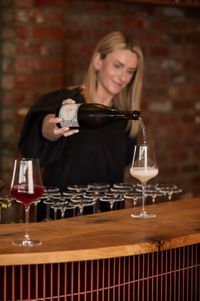
Traditional Method vs Other Ways of Making Bubbles

If you’ve made it this far, you’re probably wondering about the production methods. There are several ways of making sparkling wine, but one of the most important is the traditional method. This is the method used for Champagne and many of the world’s finest sparkling wines. The wine undergoes a second fermentation in the bottle, which creates the bubbles. It then spends time ageing on the yeast cells left behind from that fermentation, contributing texture, complexity and those lovely toasty, bready characters we often associate with Champagne. It’s one of the reasons traditional-method sparkling can have such depth. But it isn’t the only way to make delicious bubbles.

Pét-Nat

Take pét-nat. Short for pétillant naturel, pét-nat is made using a more ancient approach where the wine is bottled before its fermentation is completely finished. The remaining fermentation creates the bubbles in the bottle. The result can be cloudy, lively, fresh and a little unpredictable — and that’s part of its charm. Anim Pét-Nat is exactly the sort of bottle we love for this. It’s not trying to be Champagne. It’s doing its own thing.

And that’s a pretty good philosophy for sparkling wine generally.

So, What Should You Drink?

This is where we think the fun really starts.


Want Champagne? Try Frédéric Savart if you want to explore grower Champagne, or Billecart-Salmon and Charles Heidsieck for classic Champagne houses. Forest-Marie is another bottle worth exploring if you’re looking to venture beyond the obvious names.


Want Australian sparkling? Start with Stefano Lubiana for Tasmanian sparkling, or try Oakdene Kristen Sparkling for something closer to home. Delamere is another Tasmanian producer we love.


Want French bubbles without Champagne pricing? Look towards Domaine Pichot Vouvray Brut, Duture, Jean François Mérieau J'ose les Fines Bulles, Tissot Marie Crémant or Domaine Rolet Crémant.


Want something a little different?

Try pét-nat. Anim is a great place to start.

The Claret Take

Champagne is Champagne. There’s a reason it has such an incredible reputation, and when the occasion calls for it, nothing quite hits the same. But we don’t think you need Champagne every time you want something sparkling. Australia is producing some genuinely exceptional bubbles. Tasmania is a standout. The Adelaide Hills are exciting. Geelong is right on our doorstep. And the Loire Valley offers a completely different perspective through Chenin Blanc. Then there’s Crémant, grower Champagne and pét-nat.


The world of sparkling wine is much bigger than Champagne — and we’re very happy about that.


So next time you’re reaching for a bottle of bubbles, don’t just ask “Champagne or not?”


Ask “What kind of bubbles do I feel like?”


That’s a much more interesting question. Come into Claret and we’ll help you find the answer.


A few bottles we think are worth knowing about...


We always feel so lucky to be able to stock wonderful things on the shelf that we think will bring some level of discovery, excitement but above all else quality for you. Some are already established names. Others are producers we think you’ll be hearing us wax lyrical about in store. Either way, if you see something interesting on the shelf, ask us about it. We’re always happy to point you towards something new.


Good times call for Claret xx

Zara Wilkens

More Posts

Spring Drinking: The Wines We’re Reaching ForSpring Drinking: The Wines We’re Reaching For
Spring Drinking: The Wines We’re Reaching For

Spring has arrived, and with it comes a very important change in drinking habits.


Longer afternoons, windows thrown open, the first lunches outside and those evenings where nobody seems particularly interested in going home. Suddenly, we're looking for wines that feel a little lighter, fresher and more energetic.


At Claret, we've been stocking the shelves accordingly.


From cool-climate Victorian Chardonnay and plenty of bubbles to bright, chillable reds and European varieties, these are some of the wines we're reaching for this spring.

Negroni Month at ClaretNegroni Month at Claret
Negroni Month at Claret

September is Negroni Month at Claret.

For the entire month, we're giving one of the world's most iconic cocktails the attention it deserves — with six different takes on the Negroni pouring at the bar.

If you're already a Negroni person, you'll know exactly why we're excited. If you're not, September is a very good time to become one.

The Claret Father's Day Gift GuideThe Claret Father's Day Gift Guide
The Claret Father's Day Gift Guide

Father's Day isn't just about dads. It's a chance to celebrate the people who have been there for us — whether that's Dad, a stepdad, grandfather, father figure, or someone who has stepped into that role along the way. And, of course, there are plenty of single mums who've been doing double duty and deserve a good bottle too.


So, whoever you're celebrating this Father's Day, we've done the hard work for you.

Five Bottles Worth Knowing About Right NowFive Bottles Worth Knowing About Right Now
Five Bottles Worth Knowing About Right Now

There’s always something interesting finding its way onto the shelves at Claret. The

Sometimes it’s a producer we’ve been drinking for years. Sometimes it’s a bottle that’s been quietly sitting in a cellar, waiting for its moment. And sometimes it’s simply something we tasted and thought: Yep. The Claret Family need to know about this.