
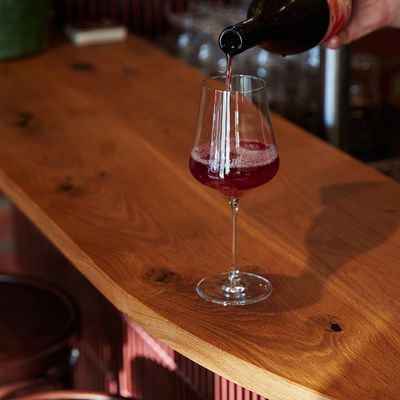

Zara Wilkens | 22 hours ago

Does Wine Glassware Really Matter?

Yes.


Not just for the aesthetic, although we are certainly not pretending the vibes are irrelevant. Wine simply feels better in a good glass. And, let’s be honest, the wine does cry a little when it is served in something with a chunky rim and a stem built like a table leg.


The right glass does not need to be painfully expensive, reserved for special occasions or designed for one very specific grape grown on one particular hillside. It just needs to help the wine be its best self.


That means giving the wine enough room to move, enough space for its aromas to collect and a fine enough rim that you notice the wine rather than the vessel carrying it.

What does a good wine glass actually do?

A good wine glass gives wine room to open up.


The bowl holds the aromas released from the wine and draws them towards the nose. A narrower opening helps concentrate those aromas rather than allowing them to disappear straight into the room. The finer rim makes the glass feel more elegant and keeps the focus on what you are drinking.


Most importantly, a good bowl lets you get your nose in there. Give the wine a swirl. Smell it. Go back again. Watch it change as it sits in the glass. Wine is not only about flavour. Aroma is a huge part of the experience, and a well-designed glass gives the wine the space to show you what it has.


Does that mean an ordinary glass will ruin a good bottle? No. We would rather drink good wine from a tumbler than no wine at all. But if you have gone to the trouble of choosing a bottle you are excited about, the right glass can help you get more from it.


Does the shape of a wine glass matter?

It does, although perhaps not in the way the wall of different shapes at the department store would have you believe.


The size of the bowl, the shape of the opening and the thickness of the rim can all affect how you experience a wine. A larger bowl gives the wine more contact with air and more room for aromas to gather. A tapered opening helps direct those aromas towards you. A fine rim makes each sip feel cleaner and less interrupted.


Different shapes can highlight different qualities in a wine, but you do not need a separate glass for Chardonnay, Pinot Noir, Riesling, Cabernet, Champagne and whatever else happens to be open on a Tuesday night.


For most people, a properly designed universal glass will cover almost everything beautifully.

Why we love a universal wine glass

Universal wine glasses make sense for the way most of us actually drink.

They work when one person is drinking white and another is drinking red. They work when sparkling becomes Chardonnay, which becomes Pinot Noir, which becomes a decision for tomorrow. They are ideal for everyday drinking, dinner parties and entertaining without requiring a cupboard that looks like a restaurant glass store.


A good universal glass should have enough bowl for a serious red, enough finesse for a delicate white and a shape that keeps sparkling wine lively while allowing you to smell it properly.


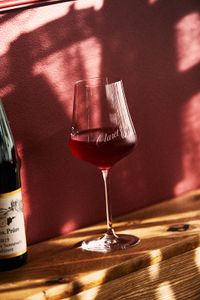
That versatility is why we use Gabriel-Glas StandArt universal glasses at Claret.

Why we use Gabriel-Glas at Claret

The Gabriel-Glas is our everyday glass in the bar, although “everyday” should not be mistaken for ordinary.


It has a generous, tapered bowl that gives wine plenty of room to move while concentrating the aromatics. It feels fine and elegant in the hand, but it is practical enough to cope with actual bar service. It also holds up well in the dishwasher, which matters when you are using a lot of them every week. Most importantly, it works across a genuinely broad range of wines.


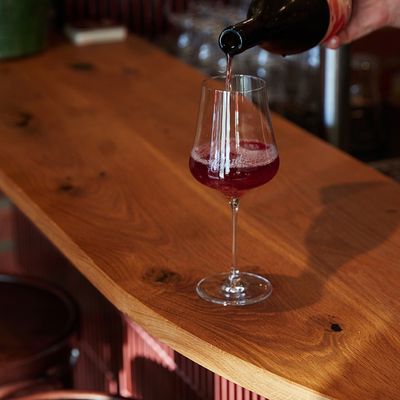
Before a wine makes it onto our by-the-glass list, we taste it from the same Gabriel-Glas our customers will use. We are looking for wines with immediacy, energy and deliciousness from the first glass. We want to know that when it reaches the bar, it will show exactly as we hoped.

We really do think about that experience. The temperature, the glass, how the wine opens and how it feels when it reaches the table are all part of the pour.


The glass should not distract from the wine. It should quietly make the wine more enjoyable.

Do we ever use a different glass?

Yes. Claret has two principal wine glasses.


Our Gabriel-Glas universal glasses handle almost everything we pour by the glass. We also use larger Plumm glasses for selected bottles of Pinot Noir and Chardonnay.


Those larger bowls give certain wines additional space to stretch out. This can be particularly lovely when guests are settling into a full bottle and the wine has the structure, perfume and detail to evolve over the course of the evening.


It is not a question of one glass being good and the other being better. It is about choosing the glass that suits the wine and the way it is being enjoyed.


By-the-glass wines at Claret are chosen for immediacy and are tried and tested in the Gabriel-Glas before they reach the list. A special bottle of Pinot Noir or Chardonnay may deserve the extra room of the larger Plumm glass. Both choices are deliberate.

Do you need different glasses for red and white wine?

Not necessarily.


Larger red-wine glasses can help structured, aromatic wines open up. Smaller white-wine glasses can keep delicate wines feeling focused and fresh. Those differences can be useful, particularly if you regularly drink particular styles and enjoy comparing how they behave.


But for everyday drinking, a good universal glass removes most of the complication.

It is the option we would recommend if you are building a glassware cupboard from scratch, replacing a collection of mismatched glasses or buying a gift for someone who enjoys wine without wanting an instruction manual.


Start with fewer, better glasses. You can always add more shapes later if the glassware cupboard begins calling to you.

What should you look for in an everyday wine glass?

Look for:

A tapered bowl with enough room to swirl the wine

An opening wide enough to get your nose into

A fine, smooth rim

A balanced stem that feels comfortable in the hand

Enough versatility for red, white, rosé and sparkling wine

Dishwasher-safe construction if that suits the way you live


A shape you genuinely enjoy using. The last point matters. Glassware is functional, but it is also part of the ritual. A beautiful glass makes opening an ordinary bottle feel like more of an occasion. That is not superficial.


Enjoyment is the entire point.

How should you wash wine glasses?

We use our Gabriel glasses in a working bar, so they are not being handled like museum pieces. They perform well in the dishwasher and are made to be used.


At home, give them enough space so they cannot knock against other glasses or plates during the cycle. Use a gentle setting where possible and avoid overloading the machine. Once clean, check for water marks and polish with a clean, lint-free cloth if needed.


If washing by hand, use warm water, minimal detergent and avoid twisting the bowl and stem in opposite directions. That is often when delicate stemware breaks.


And please make sure the glass is free from cupboard smells, dust and old polishing-cloth aromas before the wine goes in. The wine has worked hard enough already.

What about Champagne flutes?

Zara does not particularly like Champagne flutes.


They look festive and keep bubbles moving in a neat little column, but their narrow shape does not give you much room to smell the wine. And Champagne is wine. Good sparkling wine has aroma, texture and detail that deserve more than a tiny opening.


We would rather serve sparkling wine in a small white-wine glass or a Gabriel-Glas. You still get the fizz, but you also get the perfume, flavour and texture that make the wine interesting.


If you love a flute, use a flute. Drinking wine is supposed to be enjoyable, and nobody needs to have their preferred glassware confiscated. We simply think bubbles have more to say when they are given a little more space.

The Claret verdict

Wine glassware matters, but it should make drinking wine easier and more enjoyable, not more intimidating.


You do not need six different shapes to drink six different wines. You need a glass with a generous bowl, a fine rim and enough versatility to handle whatever you feel like opening.


That is why we use Gabriel-Glas at Claret. It gives the wine room to be expressive, it feels great in the hand, it works across the list and it survives the practical realities of a busy wine bar.


Get your nose in there. Give the wine a swirl. Enjoy what it has to offer.


And if there are bubbles involved, you can keep the flute. Zara will be over here with the universal glass.


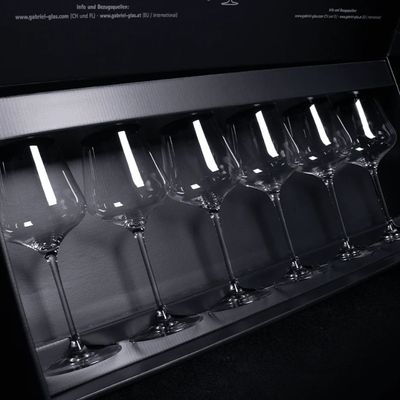
Shop Gabriel-Glas at Claret in two-packs and six-packs, or visit us on Pakington Street and try one over a glass at the bar.

A few bottles we think are worth knowing about...


We always feel so lucky to be able to stock wonderful things on the shelf that we think will bring some level of discovery, excitement but above all else quality for you. Some are already established names. Others are producers we think you’ll be hearing us wax lyrical about in store. Either way, if you see something interesting on the shelf, ask us about it. We’re always happy to point you towards something new.


Good times call for Claret xx

Zara Wilkens

More Posts

<p>How to Choose Wine When You Don’t Know What You Like</p><p>How to Choose Wine When You Don’t Know What You Like</p>

How to Choose Wine When You Don’t Know What You Like

Choosing wine can be intimidating.


Perhaps you are standing in a wine shop looking at several hundred labels, none of which are giving much away. Perhaps you are in a restaurant, everyone has handed you the wine list, and a server is waiting while you pretend to understand the difference between two villages in Burgundy.


We have all been there.


Wine has its own language, and that language is not always particularly helpful. People start talking about red apples, green apples, ruby plums, black plums, graphite, forest floors and pencil shavings. Before long, the wine sounds less like a drink and more like a fruit salad served inside a stationery cupboard.

The good news is that you do not need to know the right wine words to choose something delicious.


You just need to know how you want the wine to feel.
Geelong Wine Without the Road Trip How to Taste the Region Closer to HomeGeelong Wine Without the Road Trip How to Taste the Region Closer to Home
Geelong Wine Without the Road Trip How to Taste the Region Closer to Home

A day spent driving between Geelong cellar doors is a very good day.


There are vineyards, long lunches, rolling hills, coastal views and the deeply satisfying feeling that comes from buying wine approximately twelve metres from where it was made.

But sometimes you want to explore Geelong wine without organising an itinerary, appointing a designated driver or committing an entire Saturday to the cause.


Good news. You can start much closer to home.


Whether you order a local wine by the glass, build a few-bottle tasting from the shop or simply choose one producer you haven't tried before, there are plenty of ways to get to know the region without embarking on a full cellar door tour.


Orange Wine, Explained Without the LectureOrange Wine, Explained Without the Lecture
Orange Wine, Explained Without the Lecture

Orange wine tastes as good as it looks. Sometimes peachy and tropical, sometimes floral and savoury, often textural, always capable of making a table look approximately 40 per cent more fun.

It can also attract explanations with the length and emotional weight of a minor thesis. We will not be doing that. Here is orange wine without the lecture: what it is, why it has colour, what it tastes like and where to begin.

Chillable Reds: Yes, Red Wine Belongs in the FridgeChillable Reds: Yes, Red Wine Belongs in the Fridge
Chillable Reds: Yes, Red Wine Belongs in the Fridge

Red wine belongs at room temperature. Sure—if your room is a chilly European cellar and not an Australian kitchen in January.


The better rule is simpler: some reds are absolutely delicious with a bit of fridge time. A good chillable red wine is bright, light on its feet and wonderfully easy to drink. It brings the juicy pleasure of red fruit with the refreshment usually assigned to white or rosé. Less ceremony. More “shall we open another?” energy.

Geelong Wine, Without the Homework: Where to StartGeelong Wine, Without the Homework: Where to Start
Geelong Wine, Without the Homework: Where to Start

Geelong wine is close enough to feel local, varied enough to keep surprising you, and—if we are being honest—occasionally discussed as though everyone arrived with a geology degree. You did not. Excellent. This Geelong wine guide is the useful version: three parts of the region, three grapes to know, and a very easy way to choose your first bottle.

<p>Geelong Wine Producers: A Claret Guide</p><p>Geelong Wine Producers: A Claret Guide</p>

Geelong Wine Producers: A Claret Guide

We'd love to say we stock everything Geelong has to offer. We absolutely do not. There are simply too many good wines, too many small producers and not enough shelf space. Rather than attempt to create a definitive list of the best Geelong wineries, we've put together a Claret edit of some of the local producers currently on our shelves, in our fridges or on our bar list. These are wines we like, drink, pour and come back to. Some are established names that have helped put Geelong on the map; others are newer producers we're excited to watch. The common thread is that they tell us something interesting about where they're from.

What Wine Should I Bring to Dinner? A Claret GuideWhat Wine Should I Bring to Dinner? A Claret Guide
What Wine Should I Bring to Dinner? A Claret Guide

Someone has invited you to dinner.


You've been told not to bring anything.


You're obviously bringing something.


But what? Choosing a bottle for someone else's dinner can be surprisingly stressful. You don't know exactly what's being served, whether they're a red or white person, what they've already bought, or whether your host is secretly judging your wine choices.


Don't worry Claret family. We've got you.

Champagne vs Sparkling Wine: What’s the Difference?Champagne vs Sparkling Wine: What’s the Difference?
Champagne vs Sparkling Wine: What’s the Difference?

Champagne is sparkling wine. But sparkling wine isn’t Champagne...


It sounds simple, but there’s a surprisingly big world hiding behind those two words. At Claret, we’re big fans of Champagne. We’re also big fans of Australian sparkling, Loire Valley bubbles, Crémant, pét-nat and pretty much anything else that makes an excellent bottle of fizz. So, what actually makes Champagne different? And if Champagne is off the menu — whether because of price, occasion or simply because you fancy trying something new — what should you drink instead?


Let’s get into it.

Spring Drinking: The Wines We’re Reaching ForSpring Drinking: The Wines We’re Reaching For
Spring Drinking: The Wines We’re Reaching For

Spring has arrived, and with it comes a very important change in drinking habits.


Longer afternoons, windows thrown open, the first lunches outside and those evenings where nobody seems particularly interested in going home. Suddenly, we're looking for wines that feel a little lighter, fresher and more energetic.


At Claret, we've been stocking the shelves accordingly.


From cool-climate Victorian Chardonnay and plenty of bubbles to bright, chillable reds and European varieties, these are some of the wines we're reaching for this spring.