
Zara Wilkens | 2 hours ago

How Cold Should Wine Be?

A practical guide to serving temperature, fridge time and drinking wine however you like it.


Wine people can become very particular about temperature.


Sparkling must be served at precisely this number. Chardonnay must be removed from the fridge at exactly that moment. Red wine must be served at room temperature, whatever that is supposed to mean in an Australian kitchen in January.


We are not here to confiscate your ice cubes. If you like your wine properly cold, drink it properly cold. If you enjoy a cube or two in the glass on a hot afternoon, nobody from Claret is coming to your house to stop you.


It is still useful to understand what temperature does to wine. Serving a wine colder or warmer changes how much aroma, flavour, acidity, alcohol and texture you notice. Once you know that, you can choose the temperature that makes the wine taste best to you.


Here is the useful version.

What happens when wine is served very cold?

Cold makes wine feel tighter, fresher and more compact.


Acidity can seem brighter and more refreshing. Sweetness can feel less obvious. Bubbles stay lively, and alcohol tends to sit more quietly in the background.


That is why cold sparkling wine, Riesling, Pinot Grigio, Sauvignon Blanc and rosé can be so deeply satisfying on a warm day. The trade-off is that very cold wine can become less aromatic. The perfume, fruit and more delicate details may retreat for a while. A textural Chardonnay can seem leaner than it really is. A complex Champagne may show plenty of refreshment but less of its brioche, spice and depth.


This does not mean the wine is ruined. It is simply quieter. Leave it in the glass for a few minutes and it will begin to warm, open and show more of itself.

What happens as wine warms up?

As wine warms, its aromas become easier to detect.


Fruit, flowers, spice, oak and savoury characters begin to lift from the glass. The palate can feel broader and more expressive, while acidity may seem less sharp.


This is often helpful for Chardonnay, complex sparkling wine, orange wine and aromatic reds such as Pinot Noir. A wine that appeared tight straight from the fridge may become much more generous after ten or fifteen minutes in the glass.


Keep warming it, however, and alcohol can become more noticeable. Freshness may begin to fade, fruit can feel softer or heavier, and a red wine may start to seem broad and tiring rather than generous.


Temperature is therefore less about finding one perfect number and more about finding the point where the wine feels most alive.

The easiest temperature rule

If you remember only one thing, make it this: Take white wine out of the fridge a little before serving, and put red wine into the fridge for a little while before opening.


Fifteen to thirty minutes is a useful starting point in both directions.


A white or sparkling wine will warm naturally in the glass. A red wine served slightly cool will do the same. It is much easier to let a cold wine warm gently than to convince an already warm bottle to become refreshing at the table.


These are not laws. They are simply low-effort ways to help the wine show more.

A very loose wine temperature guide

If you enjoy numbers, use these as starting points:

Sparkling wine: approximately 5–10°C

Crisp whites and rosé: approximately 7–10°C

Rich or textural whites: approximately 10–13°C

Orange and skin-contact wines: approximately 10–14°C

Light and chillable reds: approximately 12–15°C

Medium and fuller reds: approximately 15–18°C


You do not need to stand over the bottle with a thermometer.


Think of the scale more simply:

Very cold keeps wine refreshing and compact.

Cool gives freshness while allowing more aroma and flavour.

Slightly warmer helps texture, perfume and complexity emerge.

Too warm can make alcohol and heaviness more noticeable.


Taste the wine and adjust from there.

How cold should sparkling wine be?

Sparkling wine generally benefits from being properly cold.


Lower temperature helps keep the bubbles lively and the wine refreshing. This is ideal for Prosecco, pét-nat, bright Australian sparkling and anything being poured generously at the beginning of a party.


More complex Champagne and traditional-method sparkling wine can become much more expressive as they warm slightly. If the bottle has toast, spice, nuttiness, texture or significant ageing, serving it ice-cold may hide some of the details you paid to enjoy.


Start cold, then allow it to change in the glass. And yes, we would still prefer to serve it in a universal wine glass rather than a narrow flute. Bubbles are wine, and wine deserves enough room to smell it properly.


Read our guide to Champagne versus sparkling wine or find out whether wine glassware really matters.

How cold should white wine be?

Crisp, lighter whites are usually happiest colder.


Riesling, Sauvignon Blanc, Pinot Grigio, Muscadet, Albariño and Vermentino rely on freshness and energy. A good chill keeps them bright and encourages the next sip.

Richer whites generally show more when they are not quite as cold.


Chardonnay, Viognier, Chenin Blanc and other textural whites can lose aroma and shape when served directly from the coldest part of the fridge. Give them ten or fifteen minutes on the bench or allow them to warm naturally in the glass.


If the wine starts feeling broad, heavy or overly alcoholic, cool it down again. The ice bucket is allowed to receive return visitors.

How cold should orange wine be?

Orange wine covers an enormous range of styles, so there is no single answer.


A light, bright skin-contact Pinot Gris can be served like a fuller white: cool, refreshing and ready to go.


A deeper amber wine with tannin, spice and savoury complexity may show better a little warmer. Too much cold can make its grip feel firmer and mute the aromas that make it interesting.


Begin cool and see what happens. Our guide to orange wine without the lecture can help with the rest.

Should red wine be chilled?

Very often, yes.


Light reds such as Pinot Noir, Gamay, Grenache and juicy red blends can be fantastic with some fridge time. Cooling them brings freshness forward and makes them particularly useful during warmer weather.


More structured reds also benefit from being served below the temperature of a warm Australian room. Shiraz, Cabernet and Nebbiolo do not necessarily need to be cold, but they rarely show their best when they have been sitting beside the barbecue.


Place the bottle in the fridge for fifteen to thirty minutes before serving. If it becomes too cold, pour a glass and wait. Wine is remarkably capable of warming up by itself.


For more encouragement, read Chillable Reds: Yes, Red Wine Belongs in the Fridge.

What does “room temperature” actually mean?

The traditional advice to serve red wine at room temperature comes from considerably cooler rooms than many Australian homes.


It does not mean a bottle that has spent the afternoon in a sunny kitchen at 25°C or more.

At that temperature, alcohol can become prominent, freshness can disappear and the wine may feel heavier than intended.


“Cool room temperature” is the useful interpretation. In many homes, that means the red belongs in the fridge briefly before it reaches the table.

What if the wine is too cold?

Wait. That is genuinely the entire solution.


Pour a glass, hold the bowl in your hands if you are impatient and revisit it after a few minutes. Swirl the wine and notice how its aroma and texture change as it warms.


This can be a wonderful way to understand a bottle. The first sip may be all freshness and structure. Ten minutes later, fruit and perfume appear. Later again, the wine may become broader, softer and more generous. There is no need to rush it with hot water, a heater or direct sun.

How do you chill wine quickly?

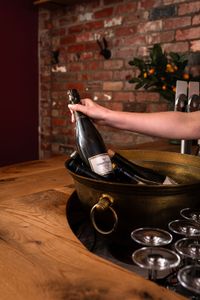
The fastest practical method is an ice bucket containing both ice and water.


Water fills the spaces around the bottle and gives it much more contact with the cold than ice alone. Rotate the bottle occasionally and it should cool considerably faster than it would in the fridge.


A little salt can help the ice-water mixture become colder, although ice and water will usually do the job perfectly well. The freezer also works, but set a timer. Forgotten frozen wine is not a hosting technique we recommend.

Can you put ice in wine?

You can do whatever makes the wine enjoyable.


Ice will make the wine colder, but it will also dilute it as it melts. That may soften the flavour, body, acidity and alcohol. The wine will not taste exactly as the winemaker intended.


The experts may not recommend it. We are still not going to judge you. If it is hot, the wine is yours and an ice cube makes it more enjoyable, carry on. You could also try frozen grapes if you want cooling without quite as much dilution.


Enjoyment remains the point.

The Claret verdict

Wine temperature changes what you notice.


Serve it colder and you will usually find more freshness, firmness and restraint. Let it warm and aroma, flavour and texture begin to emerge. Allow it to become too warm and alcohol or heaviness may take over.


Start sparkling and crisp whites cold. Give richer whites and complex wines a little more room. Put reds in the fridge when the Australian weather requires it.


Then taste. If the wine feels muted, let it warm. If it feels heavy or warm, cool it down. If you like it filled with ice, we promise to mind our own business.


The best temperature is the one that makes you want another sip.

A few bottles we think are worth knowing about...


We always feel so lucky to be able to stock wonderful things on the shelf that we think will bring some level of discovery, excitement but above all else quality for you. Some are already established names. Others are producers we think you’ll be hearing us wax lyrical about in store. Either way, if you see something interesting on the shelf, ask us about it. We’re always happy to point you towards something new.


Good times call for Claret xx

Zara Wilkens

More Posts

A practical guide to bottles, bubbles and making sure the good times don’t run dry.A practical guide to bottles, bubbles and making sure the good times don’t run dry.
A practical guide to bottles, bubbles and making sure the good times don’t run dry.

Planning a party involves several important questions.


How many people are coming? What are we feeding them? Do we have enough ice? Who said they were bringing chairs? And, most importantly, how much wine do we actually need?


Buy too little and the final hour becomes a cautious examination of what remains in the fridge. Buy too much and, well, you have wine left over. Of the two possible problems, we know which one we would prefer.

The amount matters, but so does the mix. The difference between a party that was perfectly nice and one your friends whisper approvingly about for weeks may come down to whether you bought enough bubbles and remembered that not everyone wants the same kind of white wine.


If you would like to skip straight to the numbers, use the Claret Party Drinks Calculator. Tell us about your guests and what you plan to serve, and we’ll prepare your suggested shopping list.


Otherwise, let’s talk through it.
<p>How to Decant Wine Without Overthinking It</p><p>How to Decant Wine Without Overthinking It</p>

How to Decant Wine Without Overthinking It

Decanting wine can look suspiciously like one of those rituals designed to make everyone at the table feel they have missed an important class.


There is the beautiful glass vessel. The careful pouring. The serious expression. Occasionally, a candle.


But the useful version is much simpler. You decant wine for one of two reasons: to give it air or to leave sediment behind. Sometimes both. That is really it. A decanter can help a young wine relax, allow a quiet wine to become more expressive and separate an older wine from the sediment that has gathered in the bottle. It can also make the table look very good, which is not the primary purpose but is certainly not a drawback. Here is how to decant wine without turning dinner into a formal examination.

<p>Does Wine Glassware Really Matter?</p><p>Does Wine Glassware Really Matter?</p>

Does Wine Glassware Really Matter?

Yes.


Not just for the aesthetic, although we are certainly not pretending the vibes are irrelevant. Wine simply feels better in a good glass. And, let’s be honest, the wine does cry a little when it is served in something with a chunky rim and a stem built like a table leg.


The right glass does not need to be painfully expensive, reserved for special occasions or designed for one very specific grape grown on one particular hillside. It just needs to help the wine be its best self.


That means giving the wine enough room to move, enough space for its aromas to collect and a fine enough rim that you notice the wine rather than the vessel carrying it.

<p>How to Choose Wine When You Don’t Know What You Like</p><p>How to Choose Wine When You Don’t Know What You Like</p>

How to Choose Wine When You Don’t Know What You Like

Choosing wine can be intimidating.


Perhaps you are standing in a wine shop looking at several hundred labels, none of which are giving much away. Perhaps you are in a restaurant, everyone has handed you the wine list, and a server is waiting while you pretend to understand the difference between two villages in Burgundy.


We have all been there.


Wine has its own language, and that language is not always particularly helpful. People start talking about red apples, green apples, ruby plums, black plums, graphite, forest floors and pencil shavings. Before long, the wine sounds less like a drink and more like a fruit salad served inside a stationery cupboard.

The good news is that you do not need to know the right wine words to choose something delicious.


You just need to know how you want the wine to feel.

Geelong Wine Without the Road Trip How to Taste the Region Closer to HomeGeelong Wine Without the Road Trip How to Taste the Region Closer to Home
Geelong Wine Without the Road Trip How to Taste the Region Closer to Home

A day spent driving between Geelong cellar doors is a very good day.


There are vineyards, long lunches, rolling hills, coastal views and the deeply satisfying feeling that comes from buying wine approximately twelve metres from where it was made.

But sometimes you want to explore Geelong wine without organising an itinerary, appointing a designated driver or committing an entire Saturday to the cause.


Good news. You can start much closer to home.


Whether you order a local wine by the glass, build a few-bottle tasting from the shop or simply choose one producer you haven't tried before, there are plenty of ways to get to know the region without embarking on a full cellar door tour.


Orange Wine, Explained Without the LectureOrange Wine, Explained Without the Lecture
Orange Wine, Explained Without the Lecture

Orange wine tastes as good as it looks. Sometimes peachy and tropical, sometimes floral and savoury, often textural, always capable of making a table look approximately 40 per cent more fun.

It can also attract explanations with the length and emotional weight of a minor thesis. We will not be doing that. Here is orange wine without the lecture: what it is, why it has colour, what it tastes like and where to begin.

Chillable Reds: Yes, Red Wine Belongs in the FridgeChillable Reds: Yes, Red Wine Belongs in the Fridge
Chillable Reds: Yes, Red Wine Belongs in the Fridge

Red wine belongs at room temperature. Sure—if your room is a chilly European cellar and not an Australian kitchen in January.


The better rule is simpler: some reds are absolutely delicious with a bit of fridge time. A good chillable red wine is bright, light on its feet and wonderfully easy to drink. It brings the juicy pleasure of red fruit with the refreshment usually assigned to white or rosé. Less ceremony. More “shall we open another?” energy.

Geelong Wine, Without the Homework: Where to StartGeelong Wine, Without the Homework: Where to Start
Geelong Wine, Without the Homework: Where to Start

Geelong wine is close enough to feel local, varied enough to keep surprising you, and—if we are being honest—occasionally discussed as though everyone arrived with a geology degree. You did not. Excellent. This Geelong wine guide is the useful version: three parts of the region, three grapes to know, and a very easy way to choose your first bottle.

<p>Geelong Wine Producers: A Claret Guide</p><p>Geelong Wine Producers: A Claret Guide</p>

Geelong Wine Producers: A Claret Guide

We'd love to say we stock everything Geelong has to offer. We absolutely do not. There are simply too many good wines, too many small producers and not enough shelf space. Rather than attempt to create a definitive list of the best Geelong wineries, we've put together a Claret edit of some of the local producers currently on our shelves, in our fridges or on our bar list. These are wines we like, drink, pour and come back to. Some are established names that have helped put Geelong on the map; others are newer producers we're excited to watch. The common thread is that they tell us something interesting about where they're from.