Zara Wilkens | Sep 8

What Wine Should I Bring to Dinner? A Claret Guide

Someone has invited you to dinner.


You've been told not to bring anything.


You're obviously bringing something.


But what? Choosing a bottle for someone else's dinner can be surprisingly stressful. You don't know exactly what's being served, whether they're a red or white person, what they've already bought, or whether your host is secretly judging your wine choices.


Don't worry Claret family. We've got you.

First: don't overthink it

Unless your host has specifically asked for something, you don't need to perfectly match the wine to the menu. In fact, if you're bringing wine as a gift, we'd argue that the bottle doesn't necessarily need to be the one they drink with dinner. Bring something they can enjoy later.

That's often a much better gift.

If you're bringing one bottle

Choose something versatile. A good bottle of Chardonnay, Pinot Noir or sparkling wine is usually a safe place to start. Why? Because they're flexible. They're good with food. They're interesting enough to feel special.

And they don't require you to know exactly what's coming out of the kitchen.


Our easy picks

Sparkling Wine

Probably the easiest answer of all. And for those that know, its always Zara's favourite go to. It works before dinner, with dinner and after dinner. Opening a bottle of bubbles makes even an ordinary Tuesday feel like an occasion.

Chardonnay

Particularly a good cool-climate Chardonnay.

Fresh enough to drink on its own, but with enough texture to work with food. This is why classics exist.

Pinot Noir

If you know your host likes red wine, Pinot is a great choice. It's generally lighter and more versatile than a big, heavily structured red.

If you know what's for dinner

Now we can have some fun. The general rule, as least from our side of things is you can either have something to compliment the flavours, or you can have something to contrast the flavours. We're talking rich creamy pasta = buttery Chardonnay OR crisp dry white wine.


Seafood: think fresh whites. Something with freshness and acidity is your friend.

Chardonnay, Riesling, Albariño, Muscadet or

Sparkling wine.


Pasta: This depends almost entirely on the sauce. Tomato-based? Try a bright Italian red.

Rich and creamy? Chardonnay can be brilliant. Ragù? A savoury red with some structure.


And if someone tells you white wine with white food, they probably have never had a good glass of bubbles with a burger. Trust us, its a regular pairing in our house.


Steak: Now you can bring the big stuff. Cabernet. Shiraz. Nebbiolo. Or a serious bottle of Pinot Noir if you want to take things in a different direction, we'd recommend a Geelong icon By Farr or even something from the Rhone Valley.


Cheese: This is where things get interesting.

Don't automatically reach for red. White wine can be fantastic with cheese, particularly with softer or washed-rind styles. And bubbles are almost always welcome.

What if you don't know what they're cooking?

Go sparkling. Honestly- stop thinking any further about it. A good bottle of sparkling wine is one of the most useful bottles in the world. And it doesn't have to be Champagne.

Australia makes excellent sparkling wine, particularly in cool-climate regions such as Tasmania and the Adelaide Hills. The Loire Valley is another favourite of ours, with sparkling Chenin Blanc offering something completely different from Champagne.

What if I only have $25?

Perfect. You do not need to spend a fortune to bring a good bottle of wine.

Let us know your price range and we will work some magic. Some of our best selling bottles are $25 and under. And don't be embarrassed about having a price limit. We'd much rather find you a brilliant $25 bottle than sell you something that you might not enjoy as much.

What if it's a gift?

Now you can think a little more about the person.

What do they drink? Do they love Chardonnay? Are they obsessed Italian wines since they got back from Euro Summer. Do they drink whisky? Are they the sort of person who would be thrilled by a bottle they've never seen before? The best wine gifts aren't necessarily the most expensive.


They're the bottles that say: “I thought you'd like this.” That's much more interesting.

The Claret Rule

If you're genuinely stuck, walk into a good wine shop and tell someone:

Who you're buying for.

What you're spending.

What they're eating, if you know.

What they usually drink.

That's enough. You don't need to know anything else.


And if you're bringing wine to dinner at a Geelong friend's place, you know where to find us.


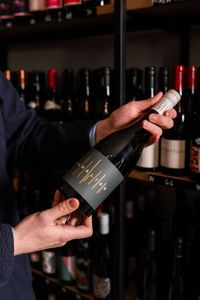
A few bottles we think are worth knowing about...


We always feel so lucky to be able to stock wonderful things on the shelf that we think will bring some level of discovery, excitement but above all else quality for you. Some are already established names. Others are producers we think you’ll be hearing us wax lyrical about in store. Either way, if you see something interesting on the shelf, ask us about it. We’re always happy to point you towards something new.


Good times call for Claret xx

Zara Wilkens

More Posts

<p>How to Decant Wine Without Overthinking It</p><p>How to Decant Wine Without Overthinking It</p>

How to Decant Wine Without Overthinking It

Decanting wine can look suspiciously like one of those rituals designed to make everyone at the table feel they have missed an important class.


There is the beautiful glass vessel. The careful pouring. The serious expression. Occasionally, a candle.


But the useful version is much simpler. You decant wine for one of two reasons: to give it air or to leave sediment behind. Sometimes both. That is really it. A decanter can help a young wine relax, allow a quiet wine to become more expressive and separate an older wine from the sediment that has gathered in the bottle. It can also make the table look very good, which is not the primary purpose but is certainly not a drawback. Here is how to decant wine without turning dinner into a formal examination.
<p>Does Wine Glassware Really Matter?</p><p>Does Wine Glassware Really Matter?</p>

Does Wine Glassware Really Matter?

Yes.


Not just for the aesthetic, although we are certainly not pretending the vibes are irrelevant. Wine simply feels better in a good glass. And, let’s be honest, the wine does cry a little when it is served in something with a chunky rim and a stem built like a table leg.


The right glass does not need to be painfully expensive, reserved for special occasions or designed for one very specific grape grown on one particular hillside. It just needs to help the wine be its best self.


That means giving the wine enough room to move, enough space for its aromas to collect and a fine enough rim that you notice the wine rather than the vessel carrying it.

<p>How to Choose Wine When You Don’t Know What You Like</p><p>How to Choose Wine When You Don’t Know What You Like</p>

How to Choose Wine When You Don’t Know What You Like

Choosing wine can be intimidating.


Perhaps you are standing in a wine shop looking at several hundred labels, none of which are giving much away. Perhaps you are in a restaurant, everyone has handed you the wine list, and a server is waiting while you pretend to understand the difference between two villages in Burgundy.


We have all been there.


Wine has its own language, and that language is not always particularly helpful. People start talking about red apples, green apples, ruby plums, black plums, graphite, forest floors and pencil shavings. Before long, the wine sounds less like a drink and more like a fruit salad served inside a stationery cupboard.

The good news is that you do not need to know the right wine words to choose something delicious.


You just need to know how you want the wine to feel.

Geelong Wine Without the Road Trip How to Taste the Region Closer to HomeGeelong Wine Without the Road Trip How to Taste the Region Closer to Home
Geelong Wine Without the Road Trip How to Taste the Region Closer to Home

A day spent driving between Geelong cellar doors is a very good day.


There are vineyards, long lunches, rolling hills, coastal views and the deeply satisfying feeling that comes from buying wine approximately twelve metres from where it was made.

But sometimes you want to explore Geelong wine without organising an itinerary, appointing a designated driver or committing an entire Saturday to the cause.


Good news. You can start much closer to home.


Whether you order a local wine by the glass, build a few-bottle tasting from the shop or simply choose one producer you haven't tried before, there are plenty of ways to get to know the region without embarking on a full cellar door tour.


Orange Wine, Explained Without the LectureOrange Wine, Explained Without the Lecture
Orange Wine, Explained Without the Lecture

Orange wine tastes as good as it looks. Sometimes peachy and tropical, sometimes floral and savoury, often textural, always capable of making a table look approximately 40 per cent more fun.

It can also attract explanations with the length and emotional weight of a minor thesis. We will not be doing that. Here is orange wine without the lecture: what it is, why it has colour, what it tastes like and where to begin.

Chillable Reds: Yes, Red Wine Belongs in the FridgeChillable Reds: Yes, Red Wine Belongs in the Fridge
Chillable Reds: Yes, Red Wine Belongs in the Fridge

Red wine belongs at room temperature. Sure—if your room is a chilly European cellar and not an Australian kitchen in January.


The better rule is simpler: some reds are absolutely delicious with a bit of fridge time. A good chillable red wine is bright, light on its feet and wonderfully easy to drink. It brings the juicy pleasure of red fruit with the refreshment usually assigned to white or rosé. Less ceremony. More “shall we open another?” energy.

Geelong Wine, Without the Homework: Where to StartGeelong Wine, Without the Homework: Where to Start
Geelong Wine, Without the Homework: Where to Start

Geelong wine is close enough to feel local, varied enough to keep surprising you, and—if we are being honest—occasionally discussed as though everyone arrived with a geology degree. You did not. Excellent. This Geelong wine guide is the useful version: three parts of the region, three grapes to know, and a very easy way to choose your first bottle.

<p>Geelong Wine Producers: A Claret Guide</p><p>Geelong Wine Producers: A Claret Guide</p>

Geelong Wine Producers: A Claret Guide

We'd love to say we stock everything Geelong has to offer. We absolutely do not. There are simply too many good wines, too many small producers and not enough shelf space. Rather than attempt to create a definitive list of the best Geelong wineries, we've put together a Claret edit of some of the local producers currently on our shelves, in our fridges or on our bar list. These are wines we like, drink, pour and come back to. Some are established names that have helped put Geelong on the map; others are newer producers we're excited to watch. The common thread is that they tell us something interesting about where they're from.

Champagne vs Sparkling Wine: What’s the Difference?Champagne vs Sparkling Wine: What’s the Difference?
Champagne vs Sparkling Wine: What’s the Difference?

Champagne is sparkling wine. But sparkling wine isn’t Champagne...


It sounds simple, but there’s a surprisingly big world hiding behind those two words. At Claret, we’re big fans of Champagne. We’re also big fans of Australian sparkling, Loire Valley bubbles, Crémant, pét-nat and pretty much anything else that makes an excellent bottle of fizz. So, what actually makes Champagne different? And if Champagne is off the menu — whether because of price, occasion or simply because you fancy trying something new — what should you drink instead?


Let’s get into it.