Zara Wilkens | Aug 26

Five Bottles Worth Knowing About Right Now

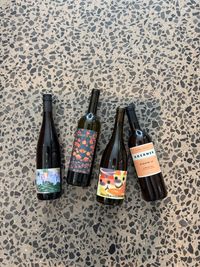
There’s always something interesting finding its way onto the shelves at Claret. The

Sometimes it’s a producer we’ve been drinking for years. Sometimes it’s a bottle that’s been quietly sitting in a cellar, waiting for its moment. And sometimes it’s simply something we tasted and thought: Yep. The Claret Family need to know about this.

Agricola Vintners — Barossa Shiraz to watch

Keep your eyes on Agricola Vintners.

The Barossa Valley has no shortage of great Shiraz, but every now and then a producer comes along that makes you stop and pay attention. Agricola Vintners is one of those producers.


Their wines have the generosity and depth you’d hope for from Barossa Shiraz, but there’s a sense of precision and energy that keeps things interesting. This is the kind of bottle we love getting behind early — an emerging producer with serious potential and wines that already punch well above their weight.


If you’re a Barossa drinker, this is one to put on your radar.


Our take: It’s the next cult figure in waiting of the Barossa.

Dalwhinnie Museum Releases — A little bit of Australian wine history

There’s something special about opening a bottle that has already done some of the hard work for you.

Dalwhinnie has been making wine in Victoria’s Pyrenees region since the first vines were planted in 1976. The vineyard sits at around 595 metres above sea level, in a remote natural amphitheatre, and Shiraz has been at the heart of the estate since its first release in 1980. With Margaret River icon and Fogarty Group head winemaker Julian Langworthy now at the winemaking helm, Conor and I had the privilege of tasting through his current releases and talking about the ageability of Dalwhinnie’s wines from years gone by. There’s something pretty special about tasting history while looking ahead to the exciting future of such a prestigious Victorian winery.


These Dalwhinnie Museum Releases give you the chance to experience that history with some serious bottle age behind them.


We have limited releases including Shiraz from 2013 and 2017, alongside Cabernet Sauvignon from 2009.


Our take: Museum releases like this do not come around often, we’re so excited to have them on the shelf and be able to share them with you – but they will not be here for long

Joshua Cooper — Single-vineyard wines from Macedon

Joshua Cooper is part of a new generation of Victorian winemakers putting serious attention back on site, texture and restraint.


Based in the Macedon Ranges, Cooper works with significant and historic vineyards across Central and Western Victoria, with a particular focus on Pinot Noir, Chardonnay and Cabernet Sauvignon. His approach is refreshingly simple: let the vineyard do the talking.


The single-vineyard releases are where this philosophy really comes into focus.

These aren't wines trying to shout across the table. They're elegant, detailed and wonderfully expressive of where they come from — the kind of wines that reward a little attention, but don't demand a lecture before you can enjoy them.


And Macedon Ranges is a pretty special place to make wine. High altitude, cool conditions and old, significant vineyard sites give these wines a natural freshness and structure.


Our take: These are serious wines; Get out your big wine glasses out, these wines deserve the royal treatment.  

Hellyers Road — Tasmanian whisky, in minis!

We’re big fans of a good Tasmanian whisky, and Hellyers Road is one of the names worth knowing.


Based on Tasmania’s North West Coast, Hellyers Road produces single malt whisky with a real sense of place — and importantly, there’s plenty of variety within the range.

The other thing we particularly like? MINI’s - these cute 200ml formats are great gifts, but also a great chance to try something new without the long term commitment of 700mls.


The 200mL formats let you explore a few different whiskies without committing to a full bottle, making them a very good option for the whisky-curious, or an easy gift for someone who is already well down the whisky rabbit hole.


Our take: A very good way to introduce someone to Tasmanian single malt especially if they're difficult to buy for.

Dangerous Ales — An Epic Hop Tale

And now for something completely different.


An Epic Hop Tale from Dangerous Ales is essentially a very delicious experiment: take one hop variety and let it do the talking.


Most IPAs are built using a combination of hops, each contributing different aromas, flavours and bitterness. Dangerous Ales takes the opposite approach, creating individual beers around a single hop variety so you can really see what that hop brings to the party.


The series has explored hops including Citra, Nelson Sauvin, Mosaic, Nectron, Motueka, Idaho 7, Krush and Simcoe, with each release offering a very different experience.

Think tropical fruit, citrus, stone fruit, pine, resin and all sorts of wonderfully hoppy things — depending on the chapter. It’s a particularly fun way to get into the world of hops without needing to know your Mosaic from your Motueka beforehand.


Our take: Grab a couple of different chapters and taste them side by side. It’s basically a hop masterclass, but considerably more fun.

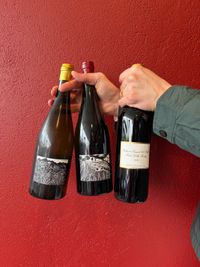
A few bottles we think are worth knowing about...


We always feel so lucky to be able to stock wonderful things on the shelf that we think will bring some level of discovery, excitement but above all else quality for you. Some are already established names. Others are producers we think you’ll be hearing us wax lyrical about in store. Either way, if you see something interesting on the shelf, ask us about it. We’re always happy to point you towards something new.


Good times call for Claret xx

The Claret Journal

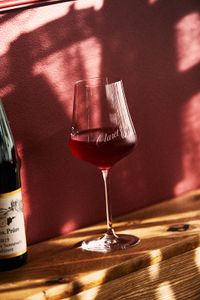
Does Wine Glassware Really Matter?Does Wine Glassware Really Matter?
Does Wine Glassware Really Matter?

Yes.


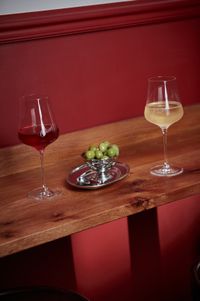
Not just for the aesthetic, although we are certainly not pretending the vibes are irrelevant. Wine simply feels better in a good glass. And, let’s be honest, the wine does cry a little when it is served in something with a chunky rim and a stem built like a table leg.


The right glass does not need to be painfully expensive, reserved for special occasions or designed for one very specific grape grown on one particular hillside. It just needs to help the wine be its best self.


That means giving the wine enough room to move, enough space for its aromas to collect and a fine enough rim that you notice the wine rather than the vessel carrying it.
<p>How to Choose Wine When You Don’t Know What You Like</p><p>How to Choose Wine When You Don’t Know What You Like</p>

How to Choose Wine When You Don’t Know What You Like

Choosing wine can be intimidating.


Perhaps you are standing in a wine shop looking at several hundred labels, none of which are giving much away. Perhaps you are in a restaurant, everyone has handed you the wine list, and a server is waiting while you pretend to understand the difference between two villages in Burgundy.


We have all been there.


Wine has its own language, and that language is not always particularly helpful. People start talking about red apples, green apples, ruby plums, black plums, graphite, forest floors and pencil shavings. Before long, the wine sounds less like a drink and more like a fruit salad served inside a stationery cupboard.

The good news is that you do not need to know the right wine words to choose something delicious.


You just need to know how you want the wine to feel.

Geelong Wine Without the Road Trip How to Taste the Region Closer to HomeGeelong Wine Without the Road Trip How to Taste the Region Closer to Home
Geelong Wine Without the Road Trip How to Taste the Region Closer to Home

A day spent driving between Geelong cellar doors is a very good day.


There are vineyards, long lunches, rolling hills, coastal views and the deeply satisfying feeling that comes from buying wine approximately twelve metres from where it was made.

But sometimes you want to explore Geelong wine without organising an itinerary, appointing a designated driver or committing an entire Saturday to the cause.


Good news. You can start much closer to home.


Whether you order a local wine by the glass, build a few-bottle tasting from the shop or simply choose one producer you haven't tried before, there are plenty of ways to get to know the region without embarking on a full cellar door tour.


Orange Wine, Explained Without the LectureOrange Wine, Explained Without the Lecture
Orange Wine, Explained Without the Lecture

Orange wine tastes as good as it looks. Sometimes peachy and tropical, sometimes floral and savoury, often textural, always capable of making a table look approximately 40 per cent more fun.

It can also attract explanations with the length and emotional weight of a minor thesis. We will not be doing that. Here is orange wine without the lecture: what it is, why it has colour, what it tastes like and where to begin.

Chillable Reds: Yes, Red Wine Belongs in the FridgeChillable Reds: Yes, Red Wine Belongs in the Fridge
Chillable Reds: Yes, Red Wine Belongs in the Fridge

Red wine belongs at room temperature. Sure—if your room is a chilly European cellar and not an Australian kitchen in January.


The better rule is simpler: some reds are absolutely delicious with a bit of fridge time. A good chillable red wine is bright, light on its feet and wonderfully easy to drink. It brings the juicy pleasure of red fruit with the refreshment usually assigned to white or rosé. Less ceremony. More “shall we open another?” energy.

Geelong Wine, Without the Homework: Where to StartGeelong Wine, Without the Homework: Where to Start
Geelong Wine, Without the Homework: Where to Start

Geelong wine is close enough to feel local, varied enough to keep surprising you, and—if we are being honest—occasionally discussed as though everyone arrived with a geology degree. You did not. Excellent. This Geelong wine guide is the useful version: three parts of the region, three grapes to know, and a very easy way to choose your first bottle.

<p>Geelong Wine Producers: A Claret Guide</p><p>Geelong Wine Producers: A Claret Guide</p>

Geelong Wine Producers: A Claret Guide

We'd love to say we stock everything Geelong has to offer. We absolutely do not. There are simply too many good wines, too many small producers and not enough shelf space. Rather than attempt to create a definitive list of the best Geelong wineries, we've put together a Claret edit of some of the local producers currently on our shelves, in our fridges or on our bar list. These are wines we like, drink, pour and come back to. Some are established names that have helped put Geelong on the map; others are newer producers we're excited to watch. The common thread is that they tell us something interesting about where they're from.

What Wine Should I Bring to Dinner? A Claret GuideWhat Wine Should I Bring to Dinner? A Claret Guide
What Wine Should I Bring to Dinner? A Claret Guide

Someone has invited you to dinner.


You've been told not to bring anything.


You're obviously bringing something.


But what? Choosing a bottle for someone else's dinner can be surprisingly stressful. You don't know exactly what's being served, whether they're a red or white person, what they've already bought, or whether your host is secretly judging your wine choices.


Don't worry Claret family. We've got you.

Champagne vs Sparkling Wine: What’s the Difference?Champagne vs Sparkling Wine: What’s the Difference?
Champagne vs Sparkling Wine: What’s the Difference?

Champagne is sparkling wine. But sparkling wine isn’t Champagne...


It sounds simple, but there’s a surprisingly big world hiding behind those two words. At Claret, we’re big fans of Champagne. We’re also big fans of Australian sparkling, Loire Valley bubbles, Crémant, pét-nat and pretty much anything else that makes an excellent bottle of fizz. So, what actually makes Champagne different? And if Champagne is off the menu — whether because of price, occasion or simply because you fancy trying something new — what should you drink instead?


Let’s get into it.